What is the environmental risk to equestrian events?
The risk to our events
For decades, sustainability has been considered a topic far from home, where exotic animals suffer the consequences of climate change. But environmental breakdown affects us all, and in the UK, we are starting to feel the effects more acutely in our events and venues in every season.
The wellbeing and safety of the teams setting up the event, the visitors enjoying the venue, and the competitors and their horses is always paramount. Climate change has put a new focus on the standard operating procedures of so many organisers and their suppliers.
We have already lost a number of our most precious venues including Chatsworth House and Gatcombe Horse Trials, and it is inevitable that more will struggle and fall by the wayside as climate change intensifies. However, it is possible to put measures in place to help keep as many of our venues and as much of the competition calendar as possible.
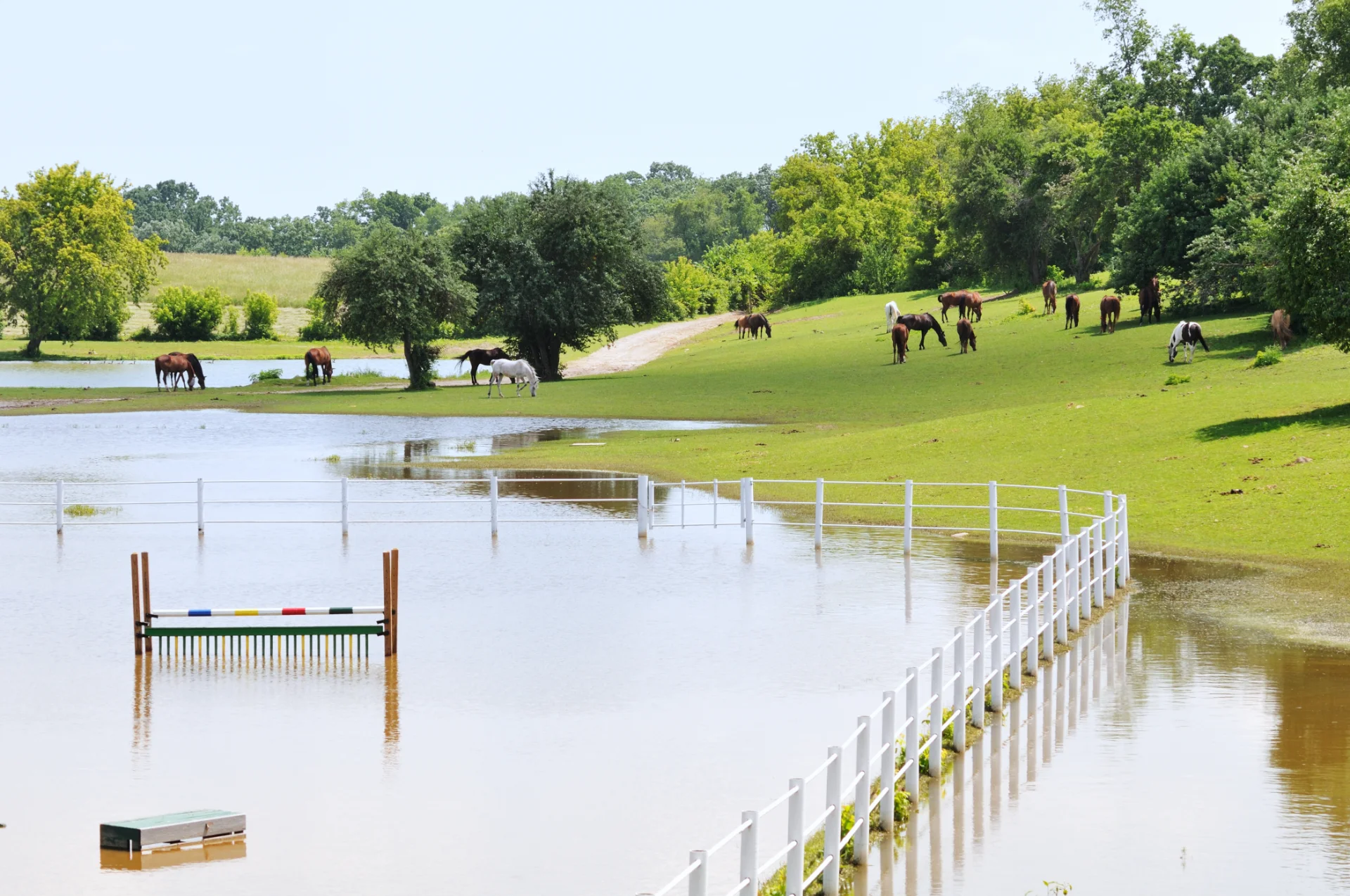
Climate change affects our ability to run events through
- Extreme heat making it unsafe to run the sport for participants and spectators
- Drought affecting the ground, making it unsafe for participants
- Continuous rain making the ground unsafe and unusable for infrastructure, parking and running the sport
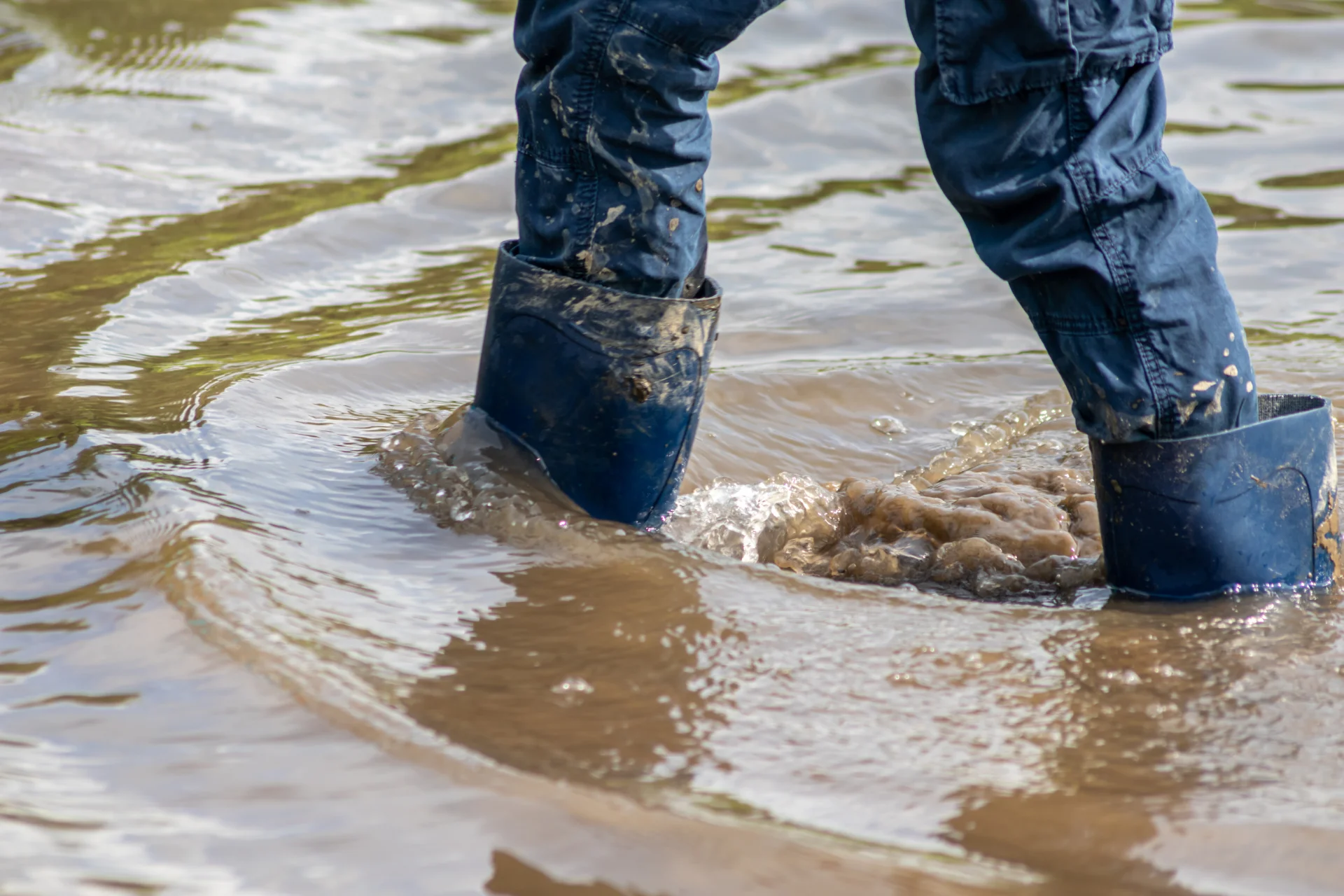
- Flooding damaging ground and infrastructure
- Storms felling trees and damaging infrastructure
- The availability of key resources like water, hay and straw
- Insurance costs increasing due to the level of risk
How to adapt
Venues can adapt in a number of ways, considering the full life cycle of their planning:
Understand the climate impacts at your location
Each location in the UK is impacted differently by climate change. Basic research will identify the specific risks in your area, whether that be drought, flooding, sea level rises, extreme heat etc.
Consider your site’s own challenges
In addition to the national climate risks, your venue will carry its own challenges. For example, a large number of trees, which may cause damage if a period of drought is followed by storms; infrastructure on site, or brought to site, that is at risk in high winds or soft ground; or even the topography of the site, and which areas may become flooded and unusable.
Build a risk profile
Based on the geographical location of your event, and the specific challenges on your site with your own infrastructure and trees, build a risk profile for your location.
Identify solutions
Once you know the risks, you can look at actions to reduce them. In some cases the risk can’t be overcome, but in many, there are actions you can take to reduce the threat. Some of these solutions are identified below.
How to protect your event
Practical measures that help keep your people, horses and competition calendar safe as the climate changes.
Protect your teams in the heat
Consider new policies to protect workers in high temperatures, for example, moving site set-up to very early mornings or very late nights in the summer. Provide drinking water fountains during set-up, and enforce PPE measures including hats, T-shirts and sunscreen, with shaded rest tents close to where people are working.
Shade and water for horses
Reconsider the placement of horse welfare areas to ensure they are well shaded and right next to water. This could mean a redesign of parts of the course or competition areas.
Shade and water for spectators
Make sure there are ample shaded areas for spectators, and plenty of well-signposted water fountains throughout the site.
Check your trees
Ask local forestry experts to assess your trees at the end of each summer, to identify any preventative measures that could be taken to safeguard trees and their surrounding areas.
Secure your water supply
Look at the cost and availability of water for preparing the ground and consider investment in a borehole, reservoir or rainwater harvesting and storage projects.
Rethink your dates
Where investment isn’t possible, consider the best time to schedule your event. Average temperatures and rainfall have shifted across the seasons, so the calendar may need adjusting to find the best time for your type of event.
All-weather surfaces
Consider all-weather surfaces or covered arenas.
Generate your own power
Identify ways in which the site may be able to become more self-sufficient through solar (which can be installed on the ground using a temporary structure, or on roofs), battery storage, solar-powered lighting, manure-fed power plants etc.
More resources for events and venues
Guides, tools and case studies to help your venue plan for a changing climate.
Explore more articles
Practical steps to cut waste at shows, clinics and competitions.
Where to start switching power, generators and transport at your event.