A good quality saddle can be a great investment. Looked after properly, it can last a very long time, saving you money while staying fit for purpose for you and your horse.
It’s essential to keep your saddle in good, safe condition and make sure it fits well. A damaged saddle can cause safety problems and pressure points. These might lead to discomfort and rubbing at first, and potentially more significant or long-term problems such as back pain, muscle soreness and more.
Natural wear and tear can change the fit and condition of a saddle over time. But often the answer is simple maintenance and small or significant repairs, rather than replacement as the only (often very costly!) solution.
Getting your saddle repaired
01
Ask the saddle brand if they offer a repair service.
Many brands are happy to repair their saddles in house (it’s worth checking this when you buy a new one).
02
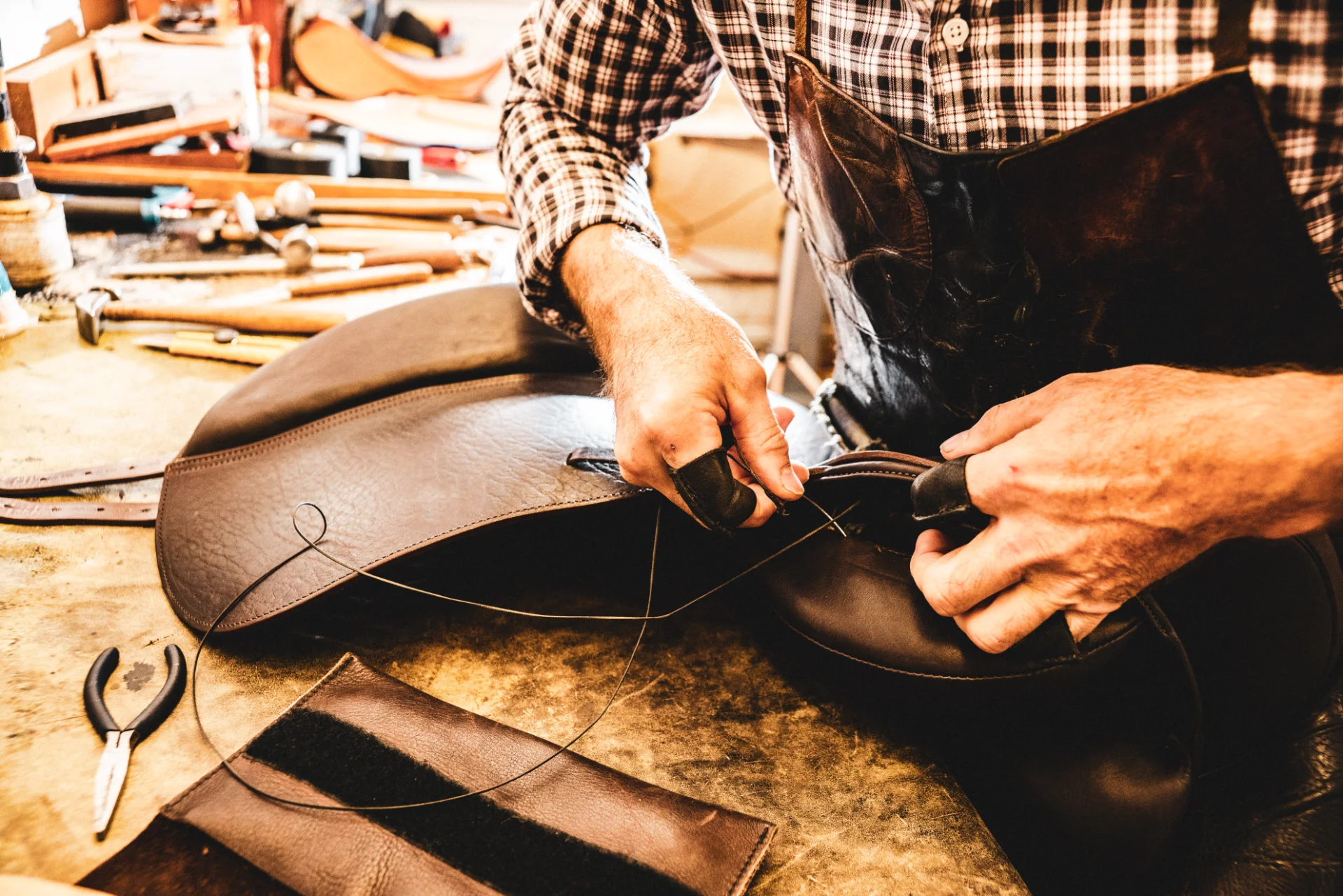
Ask a saddler or leather specialist for expert help repairing your saddle.
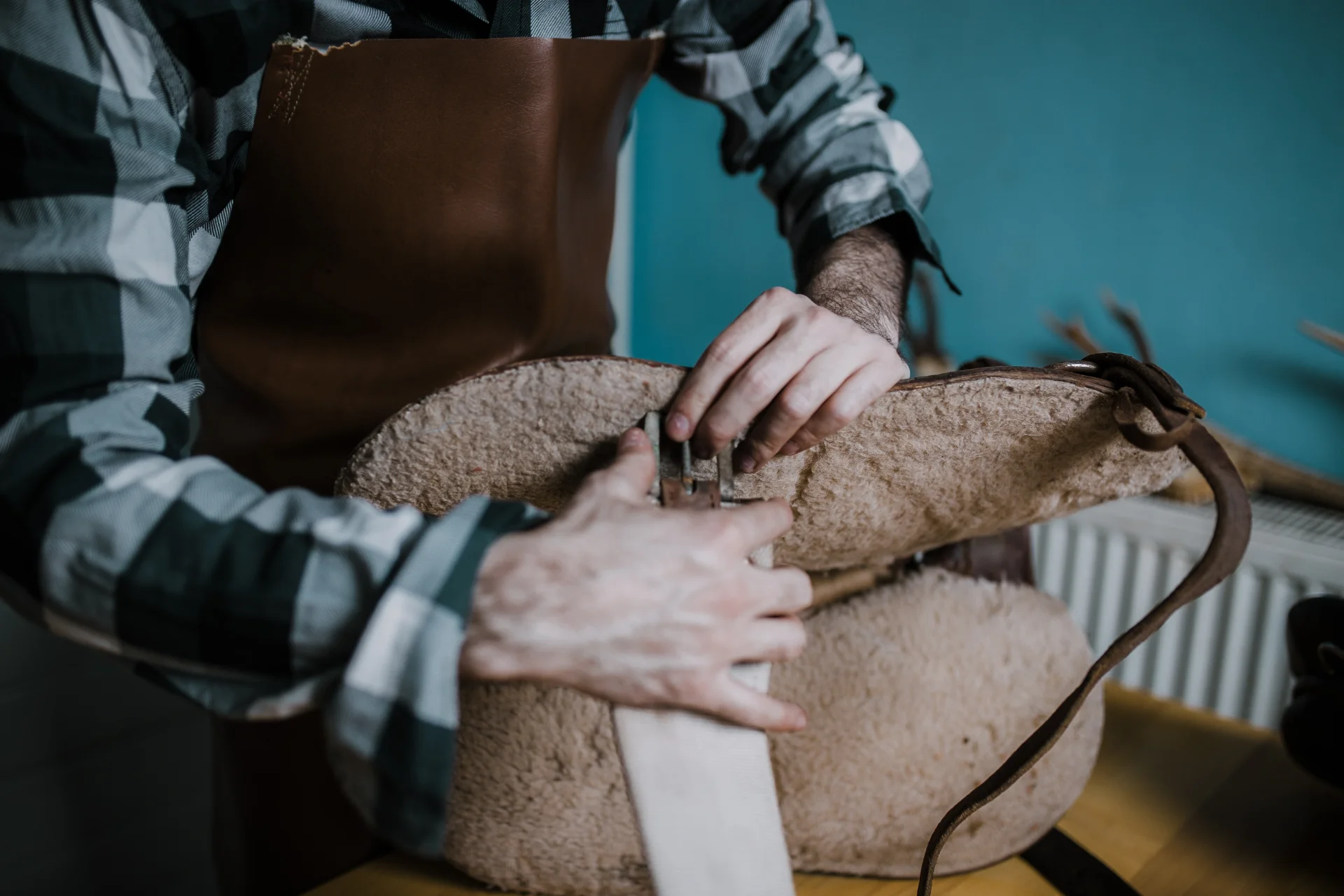
This includes maintenance such as re-flocking (if flocked), repairing damaged stitching and replacing worn or cracked parts.
03
For more significant repairs, ask a saddler whether a repair is possible.
Such as replacing entire saddle flaps, metal fittings or a damaged tree. Get their expert help.
04
For a simple mend, minor repairs or conditioning, have a go yourself.
Only if the fix doesn’t affect safety or fit for the horse.
If your saddle is still under warranty, check with the brand first, as a DIY repair may affect it.
Beyond repair?
If a saddle is beyond repair, ask your saddler or the saddle brand how they recommend you sustainably dispose of your saddle and its materials. Or get creative and repurpose it entirely!
Small repairs you can do yourself
Some basic saddle repairs and maintenance can be done yourself, such as:
01
Cleaning and re-conditioning dry, cracked or stained leather.
Clean off sweat and dirt regularly to minimise damage in the first place and reduce the need for more costly repairs later.
Minor scuffs and discolouration can be restored with leather balm, oils, leather polishes, dyes and creams. Check the product suits your type of leather first, or ask a specialist to recommend the right type of product for the job.
Our recommendation
We would always recommend using plant-based products and avoid using harsh chemicals on your leather, which aren’t good for human, horse or wider ecological health.
02
Replace small parts of the saddle that get worn over time.
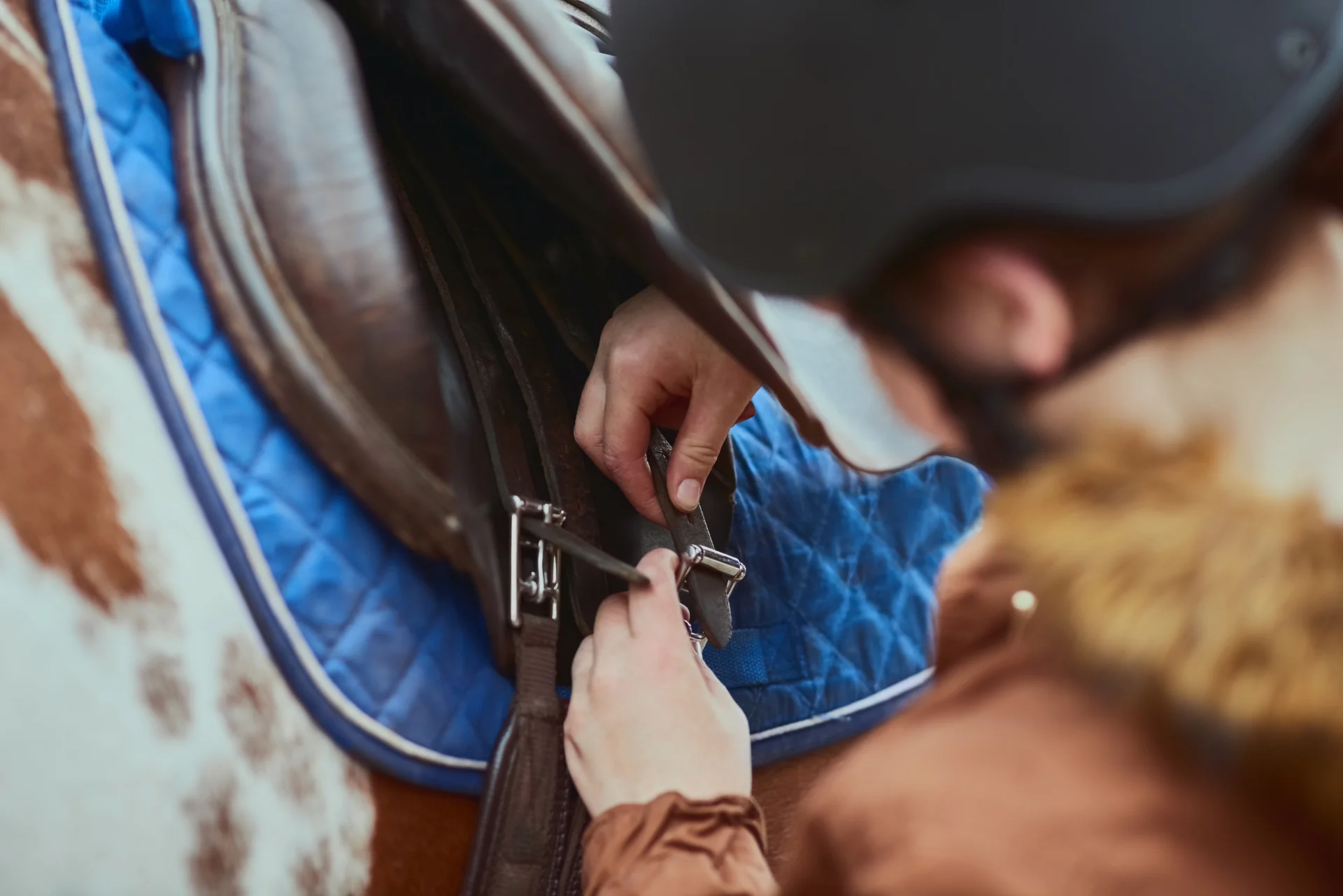
Such as stirrup leathers and replaceable girth straps.
Safety
Worn stirrup leathers and girth straps should be replaced, not repaired at home, as they affect safety for you and your horse.
What not to repair yourself
We don’t recommend repairing any load-bearing part yourself, or any fixture that keeps the saddle secure and in place, such as girth straps or stirrup leathers. If these aren’t repaired correctly, there is a significant safety risk to you and the horse. Ask a qualified professional for help in these cases.
Disclaimer: saddle fit
Saddles must be checked for fit and suitability by a qualified saddle fitter. Horses can change shape throughout the year, and the Society of Master Saddlers and British Horse Society recommend you have your saddle routinely checked every 6 months, or sooner if you notice physical changes to your horse, particularly in younger and older horses.
If you make any changes to your saddle yourself that affect its fit and use, you must get professional help to make sure it’s safe, comfortable and fit for purpose for both you and your horse.