Become resilient to floods
- 01Where to start
- 02Improve drainage around the yard
- 03Create raised all-weather areas for horses
- 04Protect your stables and buildings
- 05Introduce flood-resilient paddock management
- 06Create a wetland or flood-storage area
- 07Protect access roads and pathways
- 08Establish an emergency evacuation area
- 09Prepare an equestrian flood emergency kit
- 10Develop a flood-resilience maintenance plan
Climate change in the UK means the likelihood of more flooding through the autumn and winter months, meaning that it is important to consider how to become more resilient to flooding at your yard, throughout the property.
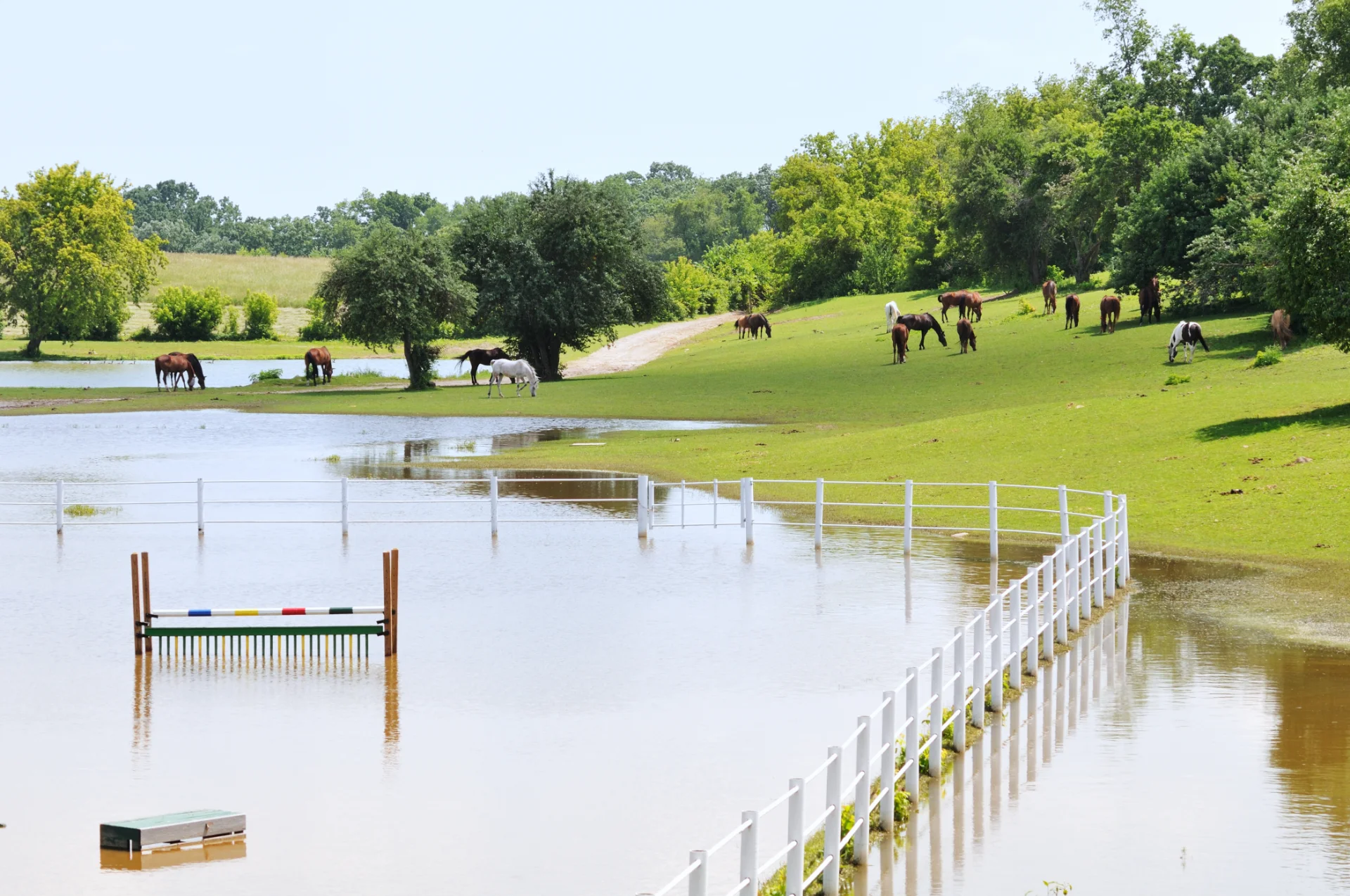
To make your equestrian yard resilient to flooding, the following priorities should be considered in building a short, medium and long term plan to safeguard your property and the wellbeing of your horses and team:
Horse safety
Safe evacuation areas, clean drinking water and emergency access.
Drainage
Identify water pathways and improve drainage around critical areas.
All-weather turnout
Create raised, durable areas for winter use.
Building protection
Protect electrical systems, feed stores and stable interiors.
Landscape improvements
Introduce wetlands, swales and flood-storage areas.
Where to start
Identify where the water comes from
A simple site survey showing flood pathways and low points can help prioritise improvements. Observe how water collects and flows in and around your yard, as well as in your fields. Our landscapes and infrastructure have a natural flow, with certain sections more prone to water gathering. Working with, rather than against that flow, can help to maintain a more resilient flood system.
Before spending money on drainage, establish:
- Where water enters the yard.
- Where water collects and how deep it gets.
- Whether flooding comes from rivers, surface runoff or groundwater.
- Which areas take the longest to dry.
- Whether neighbouring fields drain towards your property.
Improve drainage around the yard
Water is also a valuable resource, so consider putting infrastructure in place to store as much water as possible. This is particularly true for yards with arenas that require watering during the drier months. Consider installing drainage systems that work best with your site layout:
- Swales to collect and redirect surface water.
- French drains where ground conditions are suitable.
- Perimeter drainage around stable buildings.
- Drainage channels along access roads.
- Attenuation ponds to temporarily store excess water.
Create raised all-weather areas for horses
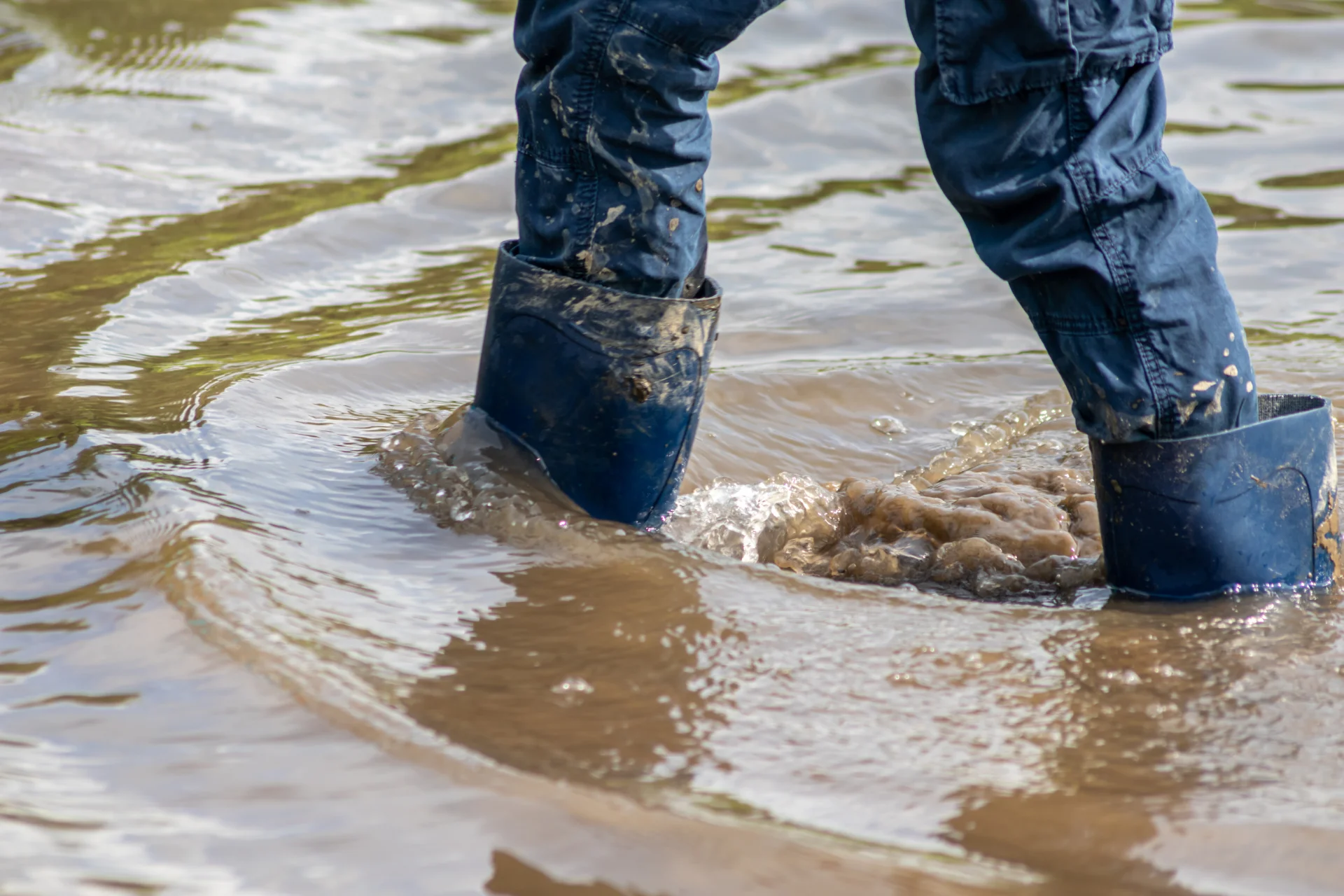
Keeping your horses outside and in their natural environment is the priority for most horse and yard owners, therefore consider maintaining options for horses in raised all-weather areas, to minimise the risk of evacuation.
Create raised, well-drained areas where horses can:
- Stand comfortably during prolonged wet weather.
- Access hay and water.
- Exercise without poaching the ground.
- Remain safely away from standing floodwater.
Protect your stables and buildings
If your stable block is already vulnerable to flooding due to its location, consider asking a professional to assess whether flood protection measures could be possible and should be implemented, alongside damage limitation for existing infrastructure. Practical improvements include:
- Raising electrical sockets and distribution boards above potential flood levels.
- Keeping hay, feed and bedding in elevated storage.
- Using flood-tolerant materials at lower wall levels.
- Installing appropriate flood barriers where suitable.
- Preventing floodwater entering through drainage systems.
- Keeping valuable equipment in higher-level storage.
Introduce flood-resilient paddock management
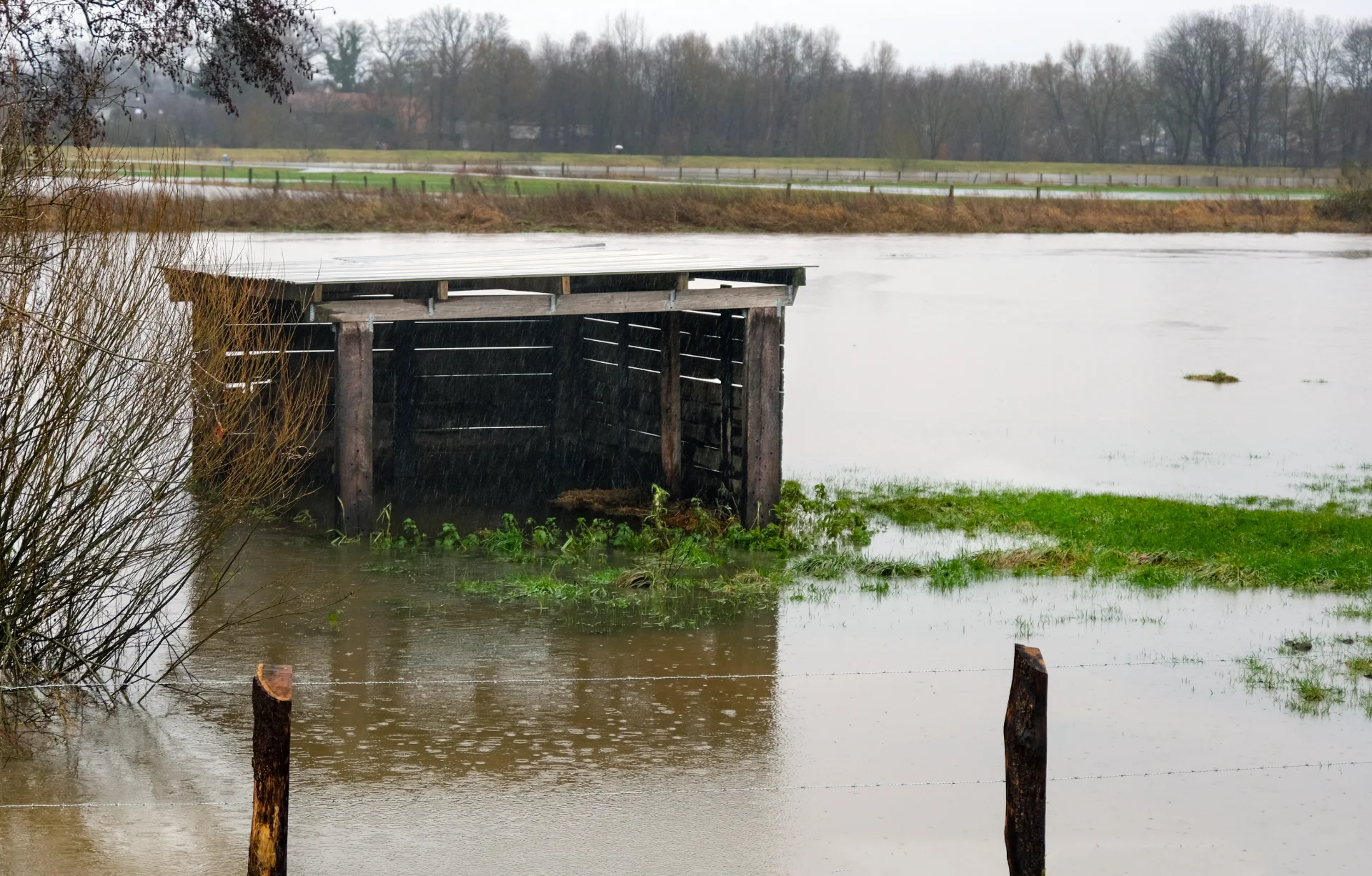
Working with the land to develop paddock management systems that prevent severe flooding will enable horses to remain outside for longer, as well as protecting the natural environment from weather extremes and flooding. Observe the natural topography of the land, where it is prone to flooding and how it impacts the soil and grassland in that space. Consider nature-based solutions to embed resilience and put in place measures to minimise damage:
- Rotate paddocks to reduce soil damage during the year.
- Move gateways away from low-lying areas.
- Reinforce heavily used gateways and feeding points with appropriate matting or surfacing.
- Introduce a surfaced winter turnout area.
- Keep horses away from contaminated floodwater.
- Protect watercourses with appropriate fencing
- Consider a track system to prevent horses trampling the same wet areas and risking hoof health issues.
- Investigate the option to plant nature-based solutions like willow and miscanthus, which absorb a lot of water
Create a wetland or flood-storage area
One of the best longer-term investments may be to dedicate part of the yard to temporary water storage. These features can reduce pressure on other parts of the yard while improving biodiversity. Ponds and water features are often a forgotten part of biodiversity enhancement and can provide a wonderful home to an array of creatures within a unique ecosystem, whilst providing a natural flood management system. Ensure that any water course or wetland area is positioned away from manure storage, and at a safe distance from horses.
- A shallow attenuation pond.
- A wet meadow.
- A network of grass swales.
- Native wetland planting.
- A designated area for temporary floodwater storage.
Protect access roads and pathways
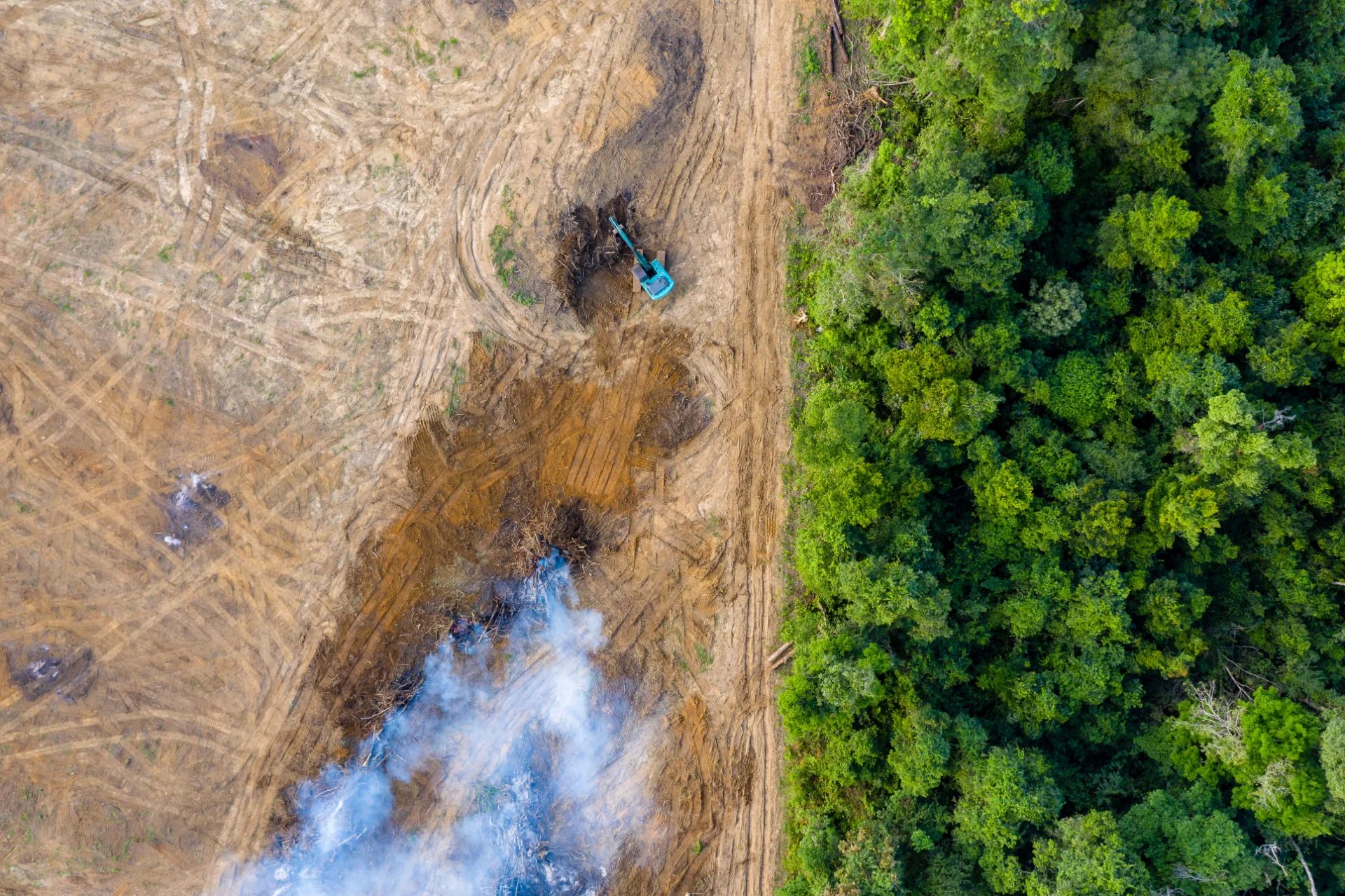
A crucial part of flood resilience is maintaining safe zones around your property for access. Ensure that roads are protected, and where a risk is identified, create opportunities for water to be diverted away from access routes.
Consider:
- Reinforced access tracks.
- Raised routes to higher ground.
- Properly designed culverts.
- Drainage along road edges.
- An alternative emergency exit if possible.
Establish an emergency evacuation area
Whilst adaptation measures can be embedded into your yard, if you know that you are at flood risk, it is important to have an emergency plan in place to safeguard the welfare of your horses and humans on site, as well as endeavour to minimise damage to infrastructure and stock.
- Identify a secure paddock on higher ground if possible.
- Where no alternatives can be found, source an emergency stabling option nearby to call in case of emergency evacuation.
- Ensure that you have an accessible horsebox loading area on a safe route avoiding flood water, in order to evacuate both horses and humans.
- Establish an emergency water supply for any horses remaining at the property.
- Create temporary storage for feed and bedding away from flood prone areas
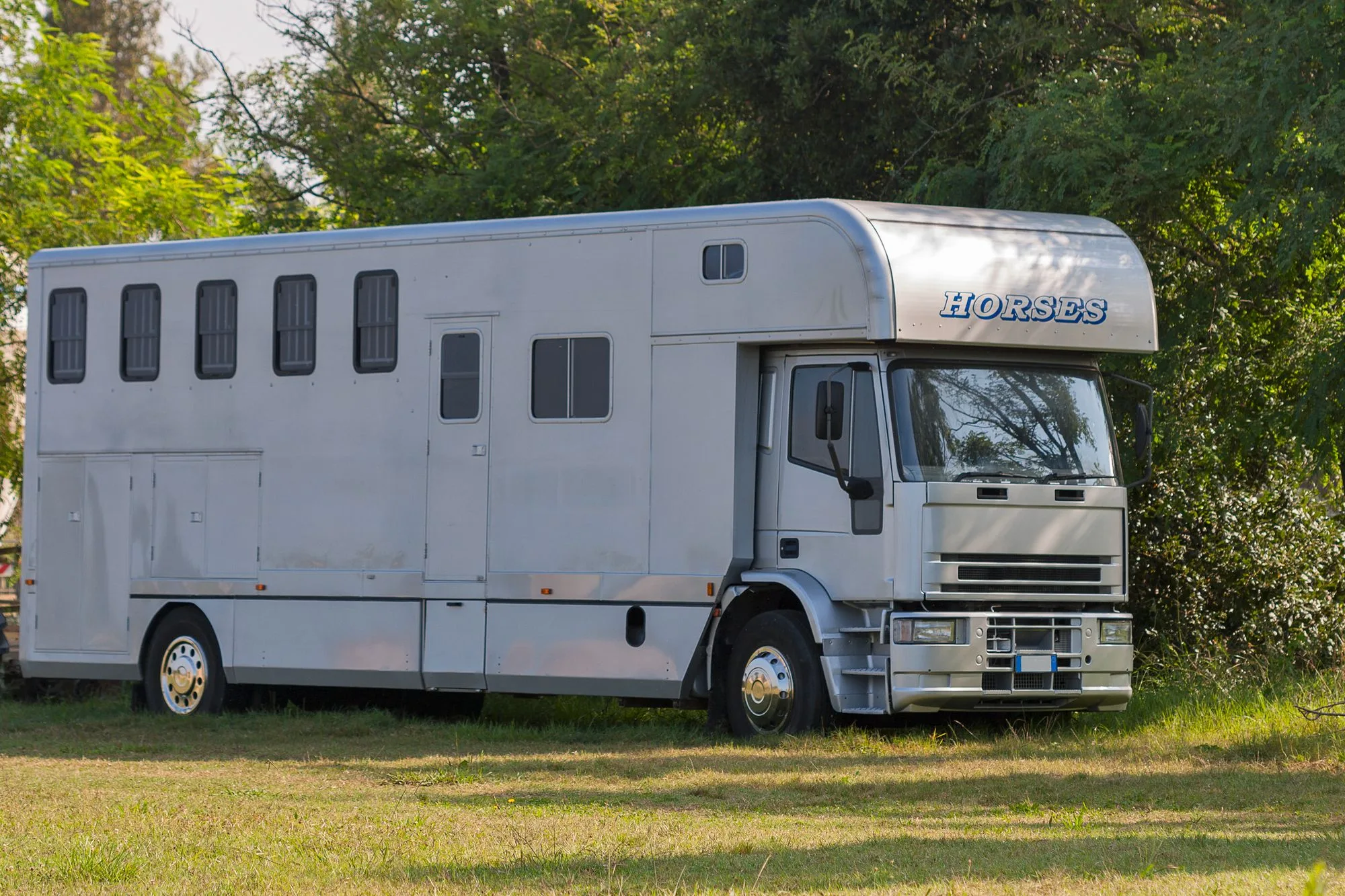
Prepare an equestrian flood emergency kit
In the event of an emergency, it is important to know what the plan is, where your key items are and to safely implement the plan, keeping yourself, your team and your horses out of harm’s way. You should never try to evacuate in fast moving water, so preparation will save valuable minutes.
Useful items include:
- Waterproof copies of horse identification and veterinary records.
- Emergency contact numbers.
- Headcollars and lead ropes.
- Portable water containers.
- First-aid supplies.
- Torches and spare batteries.
- Emergency feed supplies.
- Waterproof clothing.
Develop a flood-resilience maintenance plan
Flood resilience requires ongoing maintenance on top of investment in infrastructure and considering nature-based solutions to support drainage and absorption. Put in place a maintenance plan with the team at the yard. A checklist could look something like this:
| Frequency | Maintenance |
|---|---|
| Weekly in wet periods | Check drains and gullies |
| Monthly | Inspect gateways and surfaced areas |
| Seasonally | Clear swales and drainage channels |
| Before winter | Inspect fencing and emergency routes |
| After flooding | Check buildings, surfaces and water quality |
Explore more articles
Prepare your yard for hotter, drier summers and water shortages.
Collect and store rainwater to keep your yard supplied.
How a changing climate affects horse health and welfare, and what you can do about it.