Calculate your carbon footprint
Every business produces greenhouse gas emissions in the way we operate, the things we manufacture and the services we offer. The excess release of greenhouse gases into the environment is the leading cause of human-induced climate change, and a combined effort to ‘decarbonise’ our operations is necessary in order to avoid the worst impacts of climate change.
Where do I start?
It may help to understand a bit more about what a carbon footprint is, in order to demystify the process.
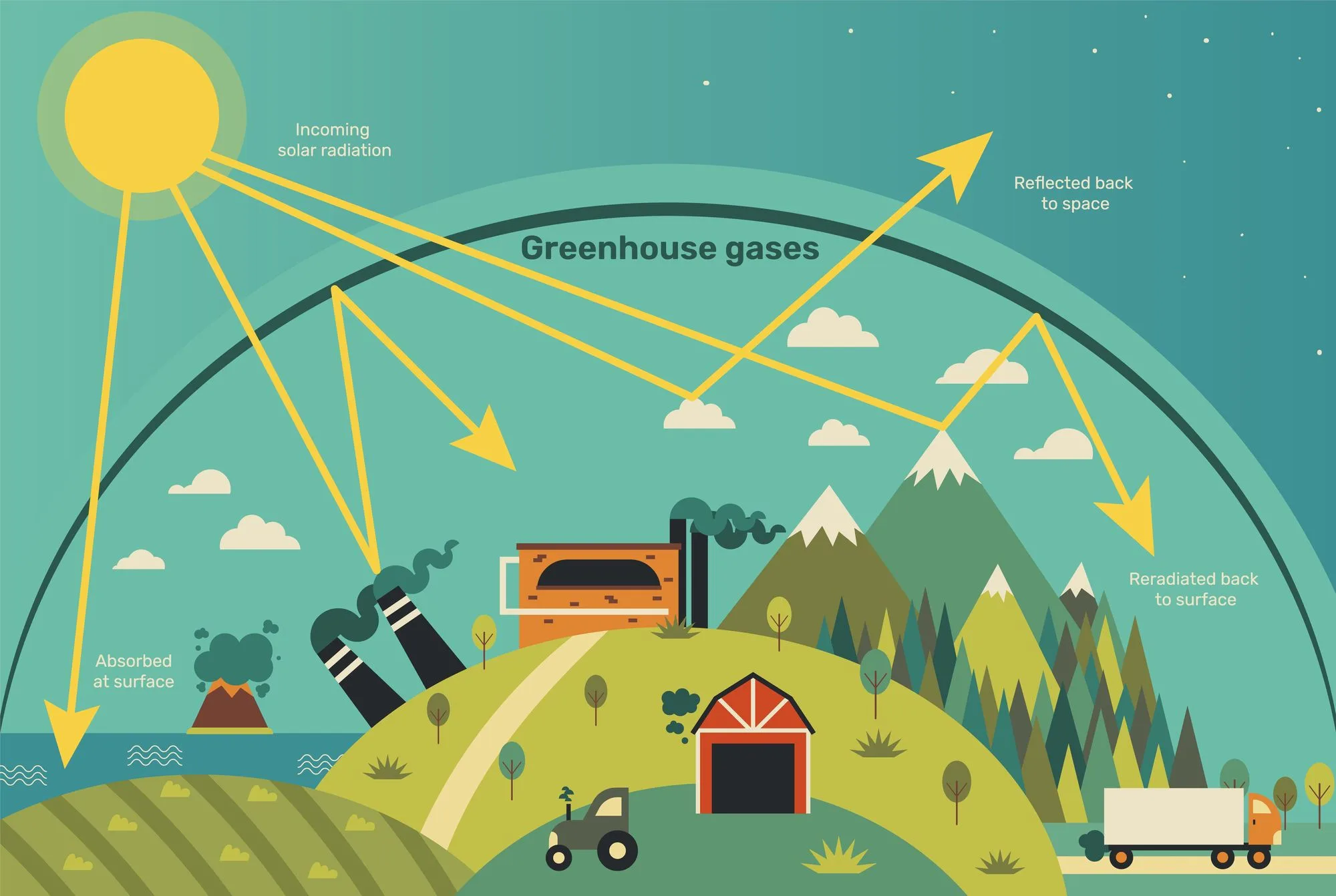
Greenhouse gases in the atmosphere are naturally occurring and actually an important part of the way in which Earth maintains the perfect conditions for life. There are a range of greenhouse gases, which is important to know when calculating your footprint.
Carbon dioxide
Makes up approximately 75% of all greenhouse gases in the atmosphere and is the unit by which we report all greenhouse gases (CO2e: the ‘e’ stands for equivalent, meaning that all of the other gases have been included and their relative strengths accounted for). CO2 is the least powerful of all greenhouse gases and derives from the burning of fossil fuels like diesel, coal, oil etc.
Methane
Makes up 8% of all greenhouse gases and is largely derived from livestock digestive processes, landfill and fossil fuel production. Though much stronger than CO2, it breaks down faster in the atmosphere, meaning the more methane we reduce, the quicker the resulting beneficial impacts.
Nitrous Oxide
Largely derived from agricultural fertilisers, fossil fuel combustion and industrial processes, it has an even higher global warming potential than methane and currently makes up around 4% of all greenhouse gases.
The others!
Hydrofluorocarbons, perfluorocarbons, sulphur hexafluoride, nitrogen trifluoride are the catchy terms for the most harmful greenhouse gases in the atmosphere. Only taking up 2% of the total, these extremely harmful gases are found in sources like refrigeration, air conditioning and industrial processes. Highly regulated, they are thousands of times more potent than carbon dioxide.
In your business, you will produce different greenhouse gases in different quantities. When a carbon footprint is created, all of these gases are taken into consideration and added together (creating a measurement of tCO2e). Understanding that air conditioning utilises the most harmful greenhouse gases, helps to make sense of why the amount of fugitive emissions (or maintenance top-ups) can have a big impact on your footprint (and why it is important to maintain your units carefully), or why waste may have a low carbon footprint (but is a big environmental problem generally).
What do I do now?
Now that we understand what makes up a carbon footprint (or greenhouse gas emissions report), it is time to begin the process of calculating your impacts. This can be done using a qualified professional, an online tool, or even via an Excel spreadsheet.
Taking the professional route
Utilising a carbon accountant takes the pressure out of the process, as they will ensure that all conversions are done correctly, the right elements are being included and will support you in gathering your data.
Using a carbon calculator
There are lots of calculators on the market, which are designed specifically for your sector. Whilst they often don’t capture everything, they can be an inexpensive way to make a start.
Doing it yourself
You can create your own carbon footprint using Excel, if you follow the guidance available through the government website.
What will I need to prepare?
To create your carbon footprint, you will typically need all of the following data to hand:
Consider the period in time that you want to start with, whether that be a calendar year, a financial year, or another period that makes sense in your operational cycle. Then gather the data for that chosen year across all of the categories. Once you have this data, whether you have chosen route 1, 2 or 3, you will be ready to start converting your activity to emissions.
- Electricity bills
- Fuel receipts
- Water bill
- Waste transfer notes
- Information regarding your staff travel
- Company car fuel or mileage
- Your purchased goods and services
The data is the map
Don’t forget that the data is only the map, a baseline that tells you where your emissions sit within your business. The map doesn’t tell you where to go or how to get there. It is important that you are clear about why and how you want to reduce your greenhouse gas emissions, to make the reporting exercise meaningful.
This may come from your strategy development exercise. If you missed this step, click here to read about developing your strategy and making decisions on your greenhouse gas reductions.

Explore more articles

Plan, prioritise and track your organisation’s progress.

Avoid greenwashing, know the law and share your progress with confidence.