How to talk about sustainability publicly
For many businesses, talking about sustainability feels like a risky business. Will I say the right thing? Will my customers like it? Could I accidentally break the law? It is a challenging topic to navigate, but one that benefits everyone when we get it right.
When we talk about sustainability and the environment, not only do we normalise the topic, but we can inspire others to do more, and of course it can help to generate more customers.

What are the risks?
There are two key pitfalls to avoid when talking about sustainability publicly: the first is the way your customers will perceive your claims and the second is the legal implications of the claims that you are making.
Greenwashing and the public
After decades of businesses making false claims, or using the environment to raise their profiles, the public have become wise to sustainability and more willing to call out greenwashing when they think they see it. So it is important to think about what you are saying, how it may be received, and to be transparent at all times.
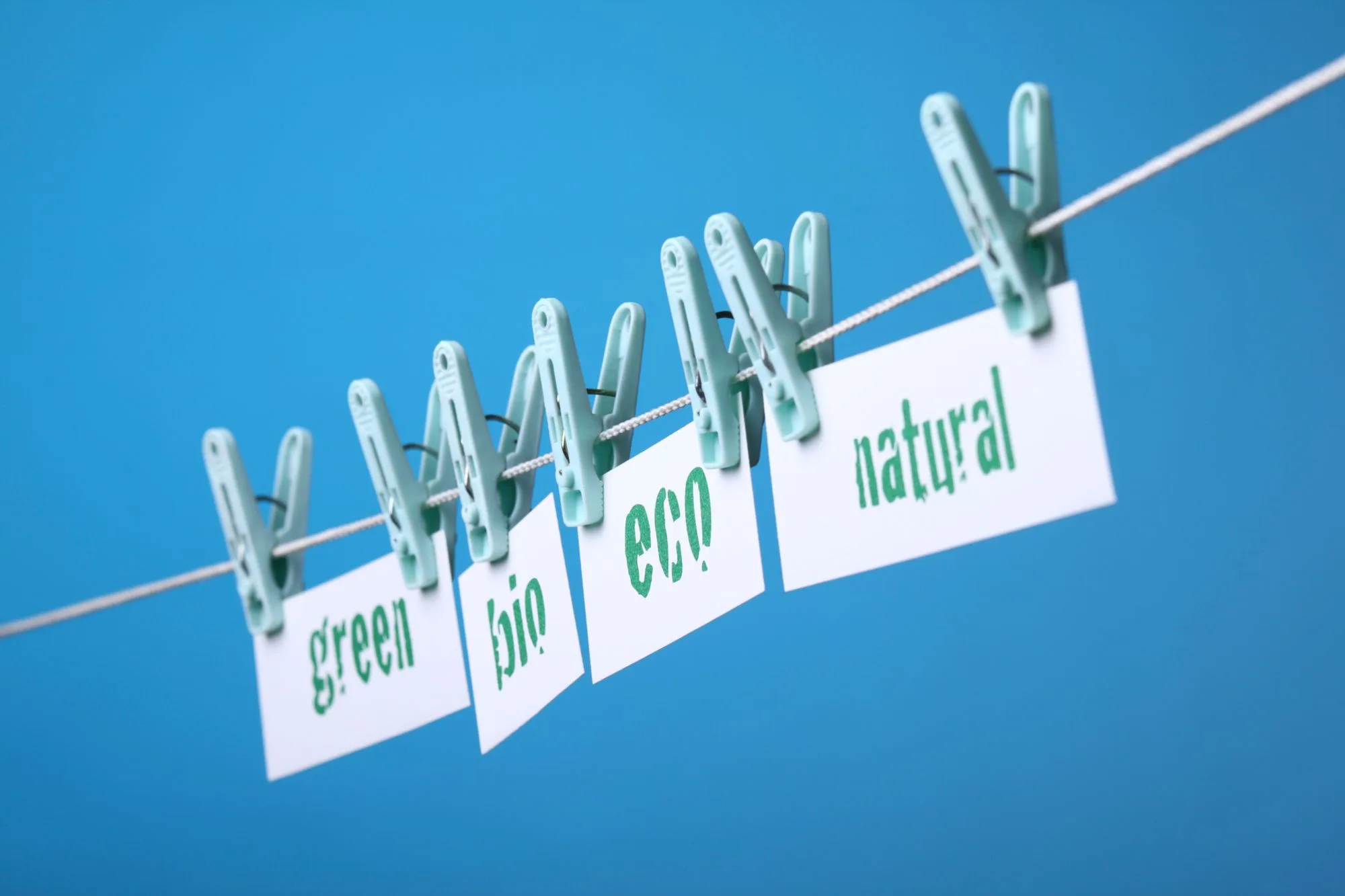
- Green-labelling: Using misleading green buzzwords or images on packaging like ‘eco’ or a leaf.
- Green-lighting: Spotlighting one small part of your operation that is sustainable to distract from the damage being done elsewhere.
- Green-hushing: Downplaying sustainability achievements and goals for fear of backlash.
- Green-shifting: Shifting the burden of responsibility to the consumer e.g. suggesting a product is sustainable because the consumer could recycle it.
- Green-crowding: Using industry averages rather than reporting individual achievements or actions.
- Green-rinsing: Changing long-term goals to give the impression of progress, usually several times.
Greenwashing in the law
In the UK and Europe, there are a number of laws that businesses should be aware of before making any claims regarding the environment.
Competition and Markets Authority Green Claims Code
Originally set out in 2023, this law is designed to ensure that businesses in the UK making claims about their products or services understand the parameters of making those claims, and can be held to account where they fall short. Claims surrounding environmental benefits, goals or achievements must:
- Be verified and backed up by evidence
- Not mislead, intentionally or unintentionally
Empowering Consumers for the Green Transition Directive (ECGT) (Directive (EU) 2024/825)
In September of 2026, the EU introduced a new regulation which strengthened laws surrounding greenwashing, as an amendment to the Unfair Commercial Practices Directive and Consumer Rights Directive. The regulation determines to take action in the following key areas:
- A complete ban on vague or generic claims that cannot be substantiated. This includes blanket references to being ‘an eco product’, ‘green’ or indeed any other label that cannot be substantiated through evidence.
- Outlawing carbon offset claims. This means that products cannot be labelled as ‘carbon neutral’ or similar where an offsetting scheme has been utilised.
- Labelling must be certified. Any claims made on labels must be backed by a certified and recognised third party scheme.
- Clamp down on lifecycle claims. Businesses cannot make false or misleading claims regarding the durability of a product, whilst concealing information surrounding its full achievable lifecycle.
- Future commitments scrutinised. Any pathways, goals or targets, for example Net Zero claims, must be publicly available with detail and regularly verified with clear plans for delivery.
So what do I do?
Whilst there are significant risks, there are also plenty of opportunities in talking about sustainability, and as long as you follow a few key guidelines, the risk is worth the reward.
Be committed
Sustainability is for life, not just for Christmas, so take the time to figure out what sustainability means to you, what you are prepared to do and why you want to talk about it. Customers will spot whether you mean it or not, so don’t miss this step (click here to read about how to create a sustainability strategy).
Be transparent
Customers, and the law, want to know the reality of your operations, not the eco-fantasy. So be honest about what you want to do, what your baseline is, what you have already done, and how you will achieve the next bit.
Show your workings out
Make sure that whatever claim you are making, you can evidence. This may be through a greenhouse gas assessment, a third party certification, a specific report or research. Whatever the mechanism, ensure that your evidence matches the claim you are making.
Be authentic
People know that sustainability can be difficult and it is not a quick fix. Show the journey, explain the difficult parts, be prepared to try and fail and tell that story too. Whilst some people may critique you along the way, authenticity will get you further than greenwashing.
Explore more articles


What it means, and what it covers across our businesses.