“It’s taking an old way of doing things, but with new technology for a better outcome [for biodiversity].”
On a sunny August morning in Cookham, Berkshire, the dry and warm conditions of this summer’s day unknowingly precede a highly anticipated turn in weather. Within the next 24 hours a burst of short, intense downpours is a welcome relief across much of England after the driest summer the UK has ever recorded.
Fortunately, Edward (Ed) Donald (Natural Shoots) and his team had chosen just the right moment to harvest the wildflower seeds from two sites in the village. Ed points out that this event typically takes place much later in the season, with the original plan being to harvest in mid-October, as has been done in previous years in this area. A flash of rain in June, followed by an extremely dry summer, had caused the wildflowers to seed much earlier. The wet and windy weather that followed imminently would have also diminished the success of the harvest yield and significantly dampened the enjoyment of the community event that is put on for the occasion.
The first of two sites being harvested on this day is a rewilded border of the golf course site, vast in species diversity, which contrasts with the surrounding golf course environment. The second site is an area of public green space in the centre of Cookham village, managed by Wild Cookham and the National Trust. The harvest is run as a public event, attracting plenty of curious locals of all ages, and provides a wonderful example of how sport, community and sustainability can all closely intersect.
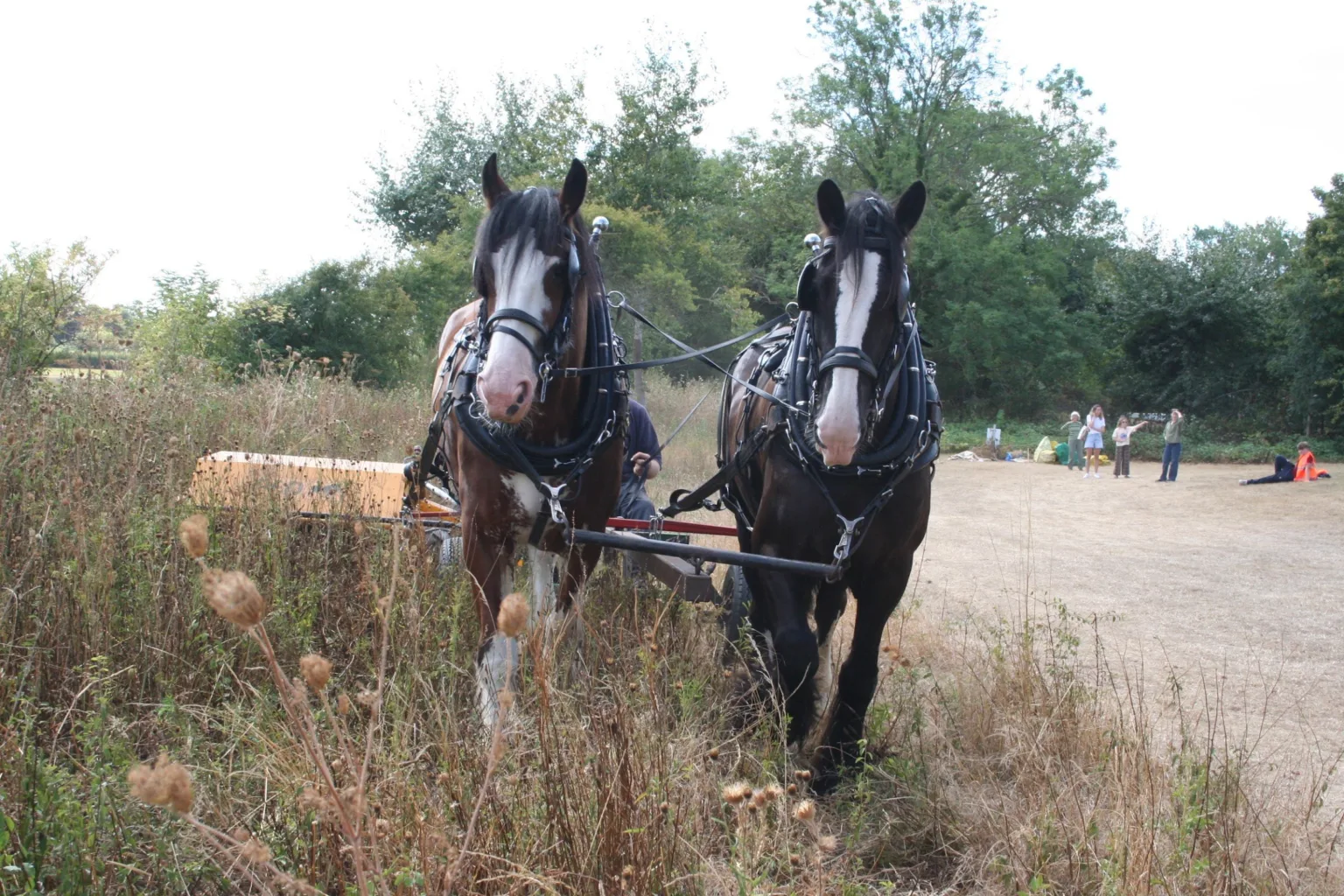
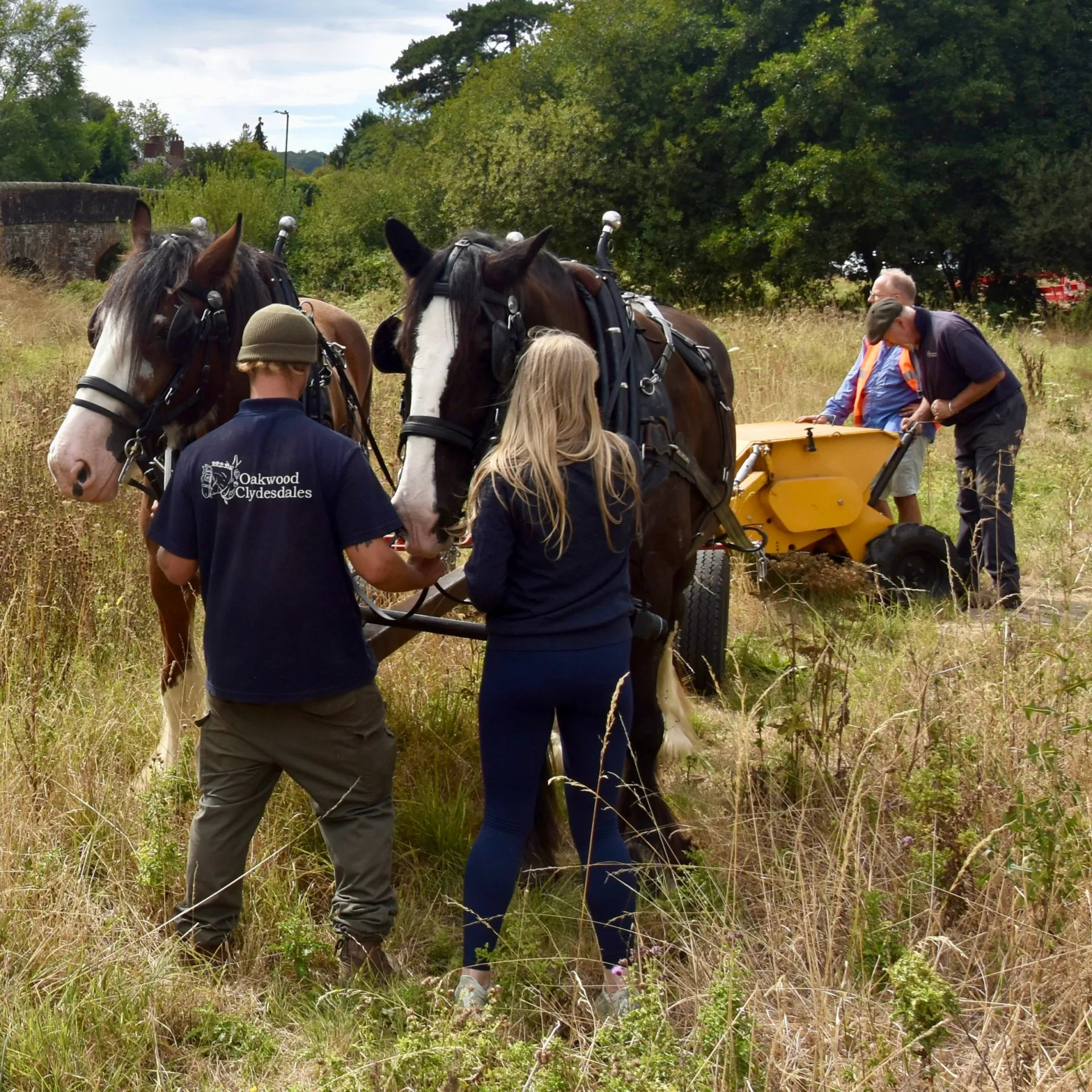
That isn’t what makes this event so unique, however. The main draw by far for all those that gather is watching Percy and Archie at work: two of Oakwood Clydesdales’ striking heavy horses.
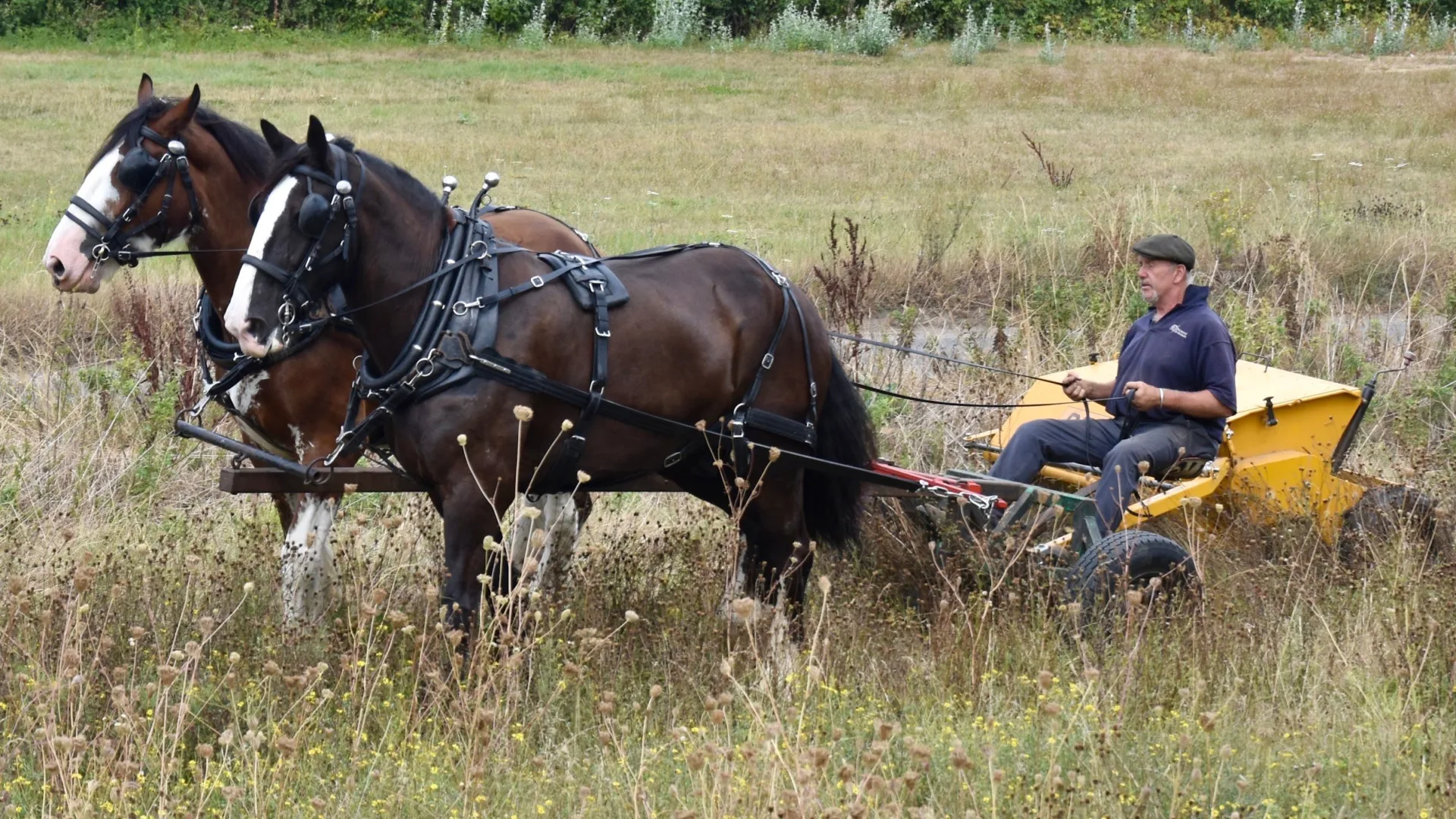
The horses work together harmoniously to pull a one-of-a-kind harvest machine that runs on 100% horsepower of the ‘truest’ kind. This piece of machinery was created by Tom (Oakwood Clydesdales) to be used with his working horses, to provide a more nature-sympathetic approach to wildflower harvesting.
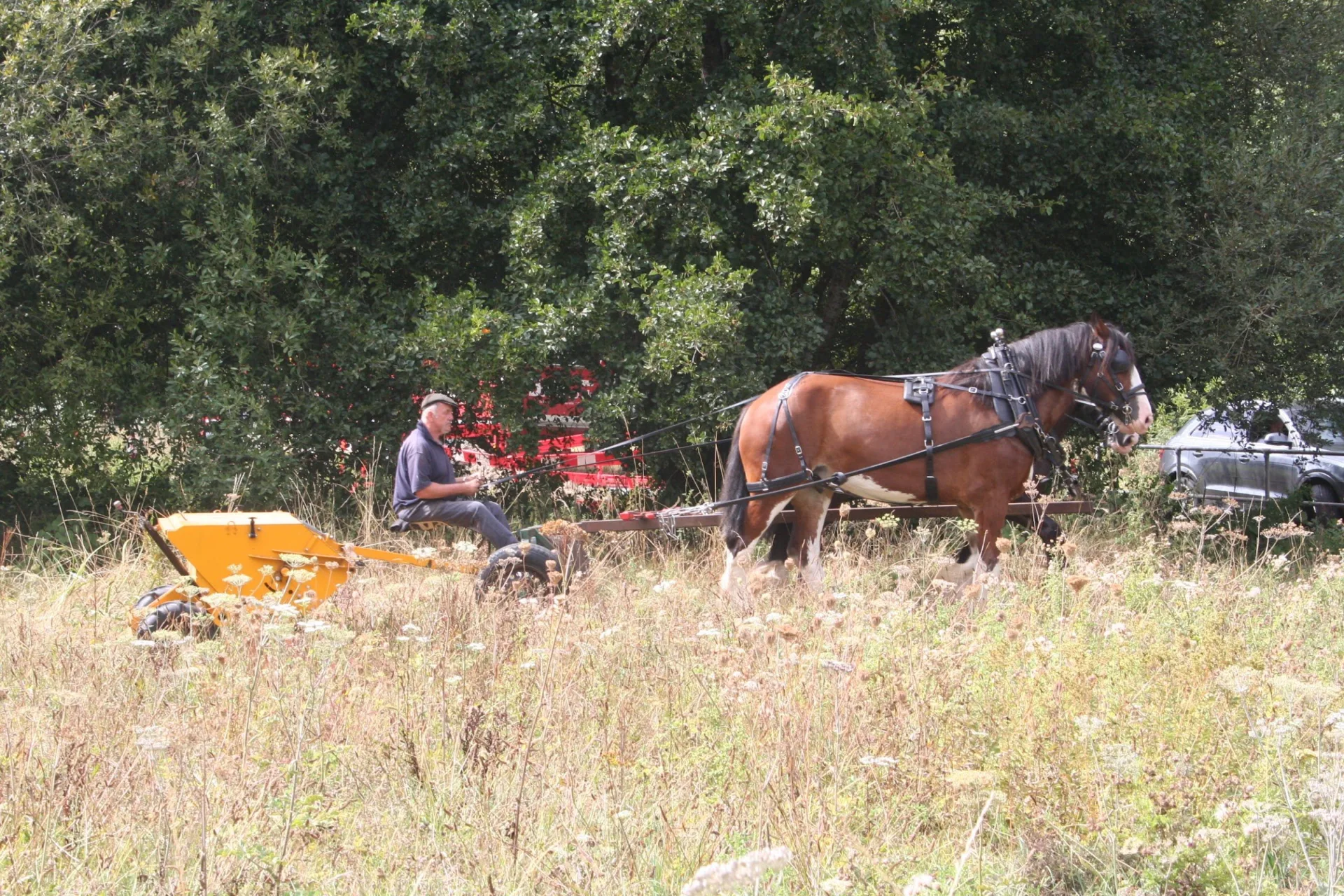
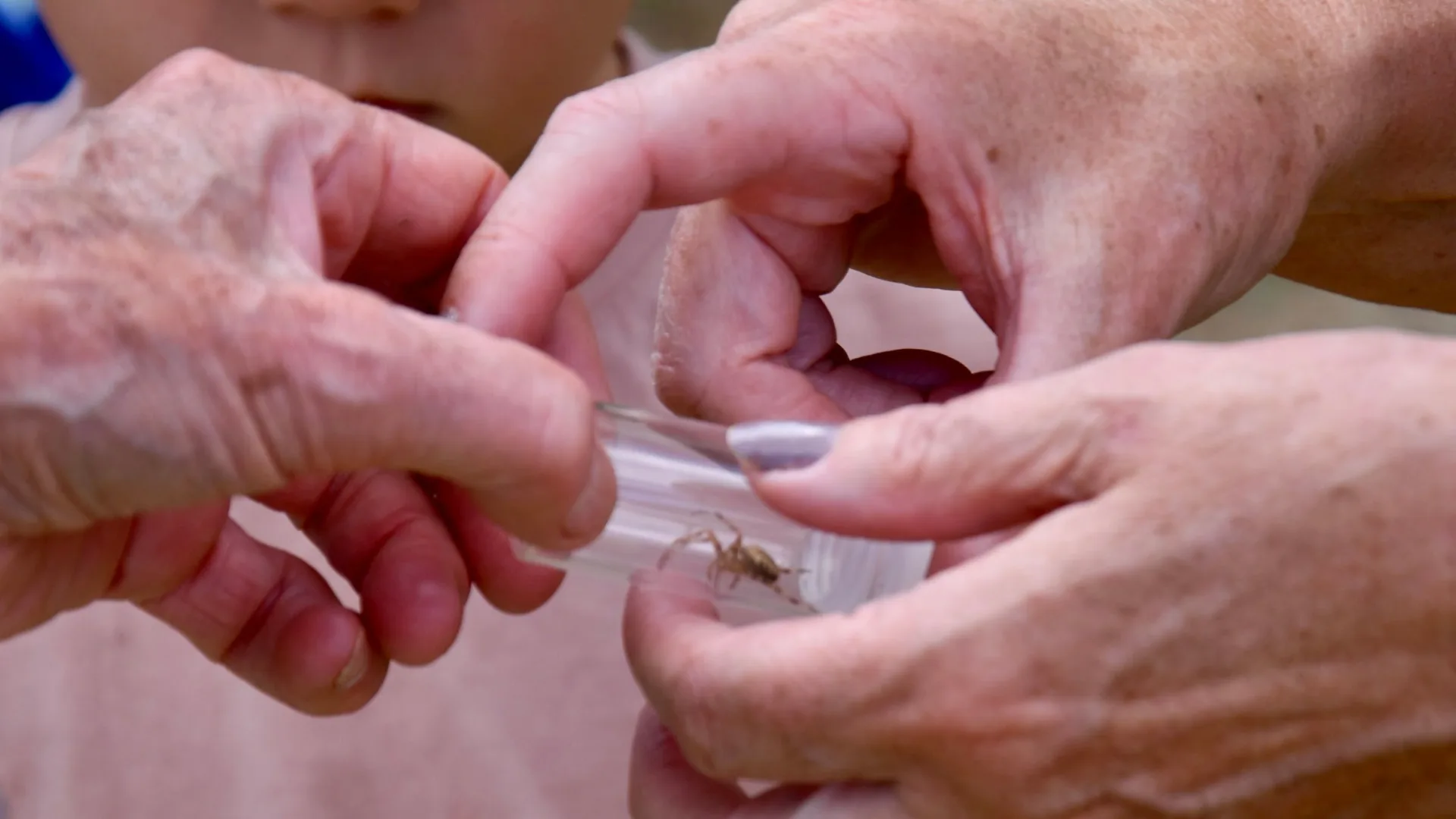
Unlike traditional agricultural machines, the horse-drawn harvesting machine’s careful design protects the insects, including pollinators, as they survive the collection process and tumble between the brushes into the hopper. This was abundantly clear on the day, as aphids, spiders, shield bugs and many other insects sprung, flew and crawled out of the hopper upon each opening. The hopper gets emptied out regularly, after the horses take a few runs up and down the harvest areas. All of the seed that falls to the bottom is collected in bags, ready to take away for drying and preparing for sale by Natural Shoots.
The entire process for selling these wildflower seeds is founded in sustainability principles, with Ed using recycled shotgun cases as the packaging, leaning into a circular mindset of not letting an otherwise considered ‘waste’ item go without a new purpose.
Using the horses in place of diesel-powered agricultural machinery significantly lowers the greenhouse gas emissions impact of the harvesting process and supports cleaner air. The horses themselves, whilst heavy, are much better for minimising ground compaction as their hooves cover only a small surface area in comparison to huge, rolling tractor tyres. The whole approach is a modern solution, combined with the very traditional methods of working heavy horses.
This is the second year the golf course has been harvested, with a total of 28 species of wildflower collected this year. This is up from 20 species the first year as the site continues to evolve naturally, and the perennials planted in the previous year flower. The area had been sown by Scout volunteers in the spring of 2025, using seeds that had been previously harvested from the site.
Separately, the area within the village was harvested for the first time this year, with 16 to 20 species of wildflower collected. This also marked a shift in community green space management, demonstrating how this can be done more sustainably.
Across the two areas the harvest on the day consisted of a wide range of wildflower seed species, including Yellow Rattle, Cowslips, and a notably high volume of Sainfoin at the golf course: a plant species that is excellent for climate resilience, tolerating drought conditions and supporting soil structure due to its deep roots.
Ed emphasises the importance of traceability of wildflower seeds in what is a high-demand market, and this formed the foundation for creating his company. Gathering the seed at these sites directly enables full traceability of the seeds Natural Shoots sell. The method of using the horses and the traditional harvesting methods also leaves behind around 10 to 20% of the seed, providing food for wildlife and allowing the meadows to flower again naturally, alongside active reseeding efforts.
The approach used by Ed and Tom shows clearly how a nature-sympathetic approach can often bring about many opportunities beyond just the environmental benefits. The event brought a community of people together, supported local businesses and enlightened all of those in attendance on the wonderful and important world of wildflowers and insects, whilst also showcasing some British heritage and the traditional methods of working horses.
Photography: Edward Donald, Natural Shoots (main image and harvester) and Paul Conacher.