New laws around sustainability may not make the headlines, but they are vital to all businesses seeking to stay one step ahead. In 2026 we have had a number of new laws come into force in the UK and Europe which may affect equestrian businesses.
Packaging and Packaging Waste Regulation (PPWR)
This is a European Union regulation that came into effect in August, covering the restrictions on the use of single use plastics in packaging. From 12 August, new requirements are in place for the manufacturing and composition of all packaging placed on the EU market. The new law can be found here, but the key points of note are:
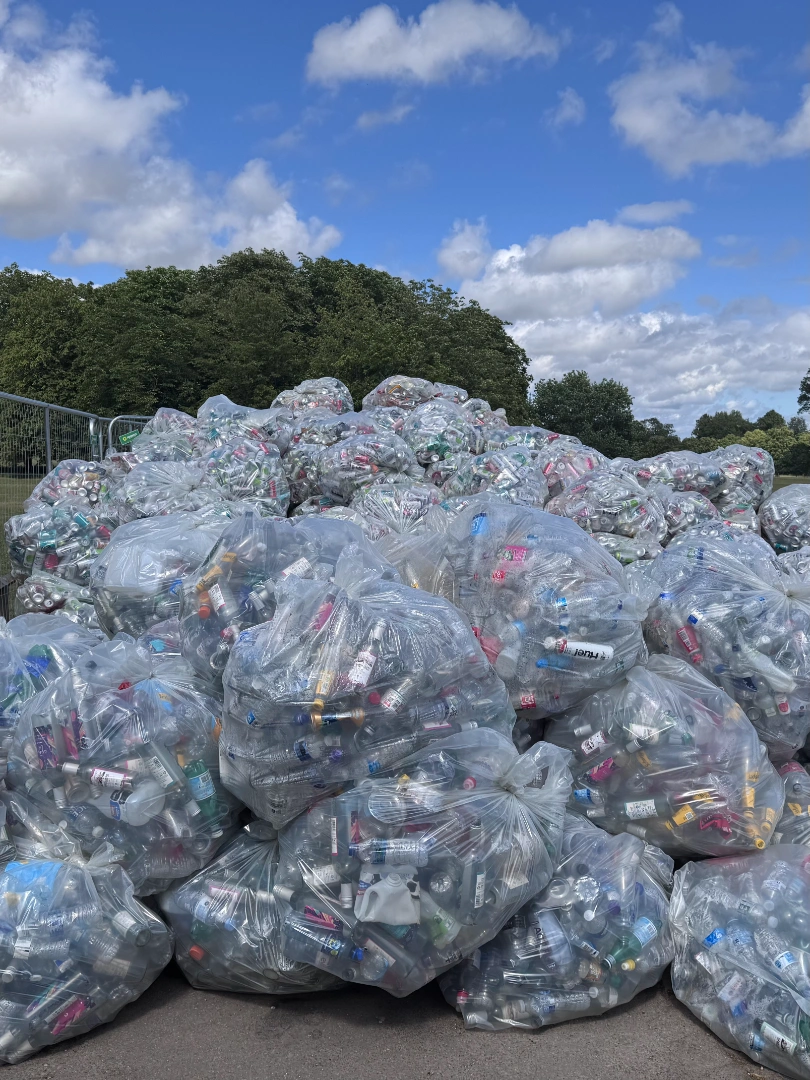
- The ruling aims to minimise the quantity of packaging and waste created at source and create a greater degree of circularity in packaging in general.
- All packaging in the EU market must be recyclable in an economically viable way by 2030.
- Manufacturers should safely increase the use of recycled plastic in packaging in order to reduce virgin plastic use.
- The packaging industry should seek to achieve climate neutrality by 2050 and improve recycling through a set of rules across all Member States.
- There will be restrictions on certain single use plastics for individual portions.
- Takeaway businesses will need to offer cost reductions for customers bringing their own containers.
- PFAS must be reduced in food packaging where they exceed certain thresholds.
EU Green Claims Directive (EU ECGT)
Another new sustainability ruling to come out of the EU this year took effect in September and relates to the way in which businesses describe their sustainability credentials. A sort of ‘greenwashing law’, the ECGT aims to ensure that consumers can be sure of the environmental aspects of the products and services they are buying. Key points of note are:
- Generic claims like eco, green, sustainable etc. are now prohibited as a sales tool, unless the seller can prove that the claims can be evidenced.
- Carbon-neutrality and other offsetting claims are prohibited.
- Claims about future performance like ‘a goal to be net zero by 2050’ are also banned unless publicly available evidence can support that the pathway is practicable and is verified by a qualified third party.
- Any self-certified eco credentials are also not allowed; only official schemes may be used to endorse a product or process, for example the Soil Association.
- Anything misleading or that cannot be evidenced regarding the product’s sustainability is banned.
- Crucially, the directive impacts any organisation selling inside the EU, including the UK.
Ecodesign for Sustainable Products Regulation (ESPR)
Back in July, another EU ban came into force preventing large companies from destroying unsold clothing and footwear. This comes off the back of the startling data regarding the volume of clothing waste polluting the environment, particularly in Asia, and the volume of resources required to produce the excessive consumption of clothing. The regulation requires all goods to be more durable, robust, reusable, upgradeable and repairable. Crucially, the change requires products to have digital tracking tools like a QR code on the label, identifying the material composition and circularity and evidencing the supply chain. It also prohibits the destruction of unsold consumer goods.
UK Corporate Reporting Overhaul and UK Sustainability Reporting Standards (UK SRS)
For most companies, carbon reporting is not a requirement, with only large companies needing to declare their emissions through SECR reporting. However, in November a consultation has opened to consider reducing the threshold for carbon reporting as well as a softening of the timeline for reporting. Full information on these changes can be found on the Sustainability Reporting Standards website.