How to manage your paddock
Healthy paddock, healthy horses
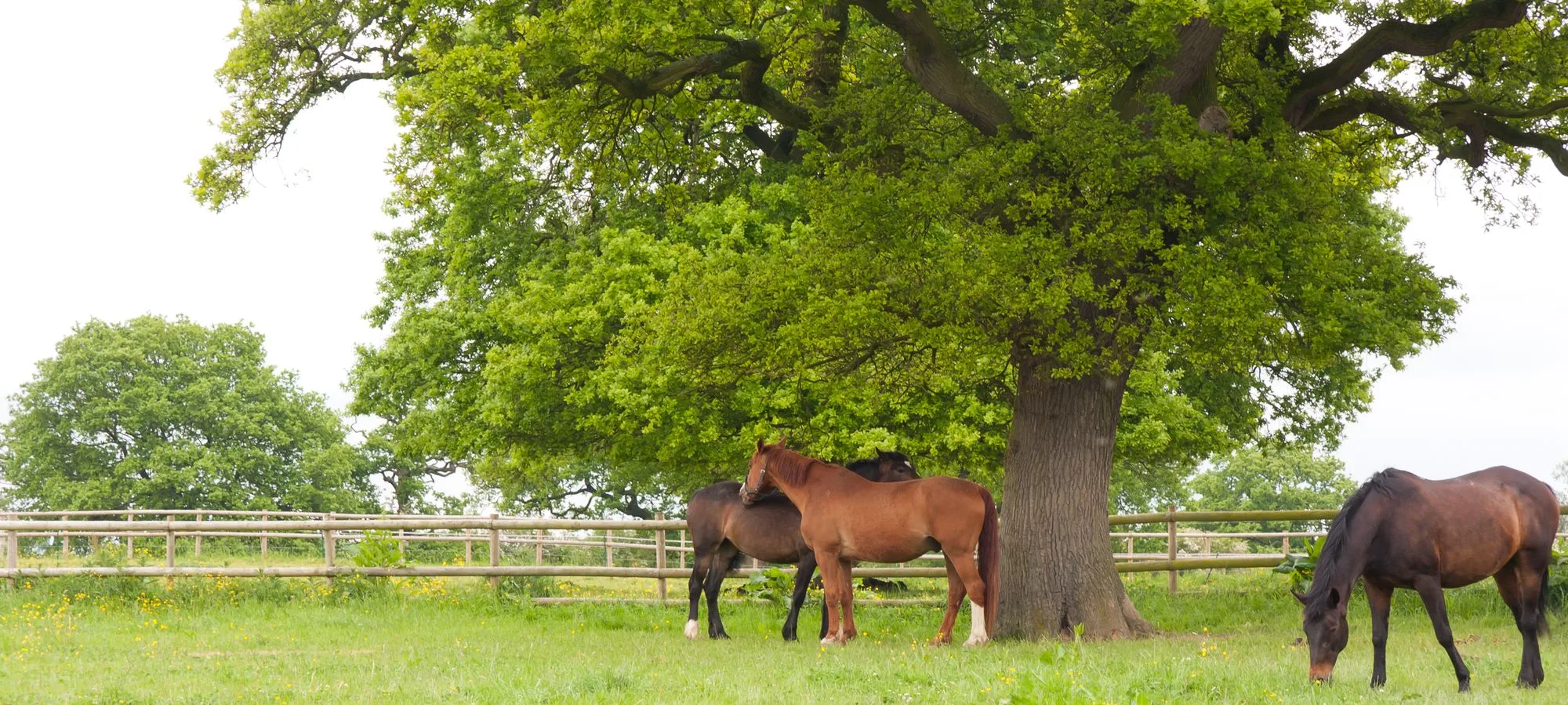
A healthy paddock is essential for providing a healthy and enriching environment for your horse.
Good grazing provides a necessary source of forage for their diet, a safe and supporting environment to spend time in, and benefits their mental health through browsing, movement and relaxing (loafing) behaviour.
However, horses don’t typically get a good reputation for being beneficial to the land they spend time on. Poaching, overgrazing, overcompacting and paddocks full of monoculture can be synonymous with horse keeping. But there is evidence that horses can both benefit the land and benefit from good paddock and grassland management.
A well-managed field or paddock can also bring a lot of benefits to wildlife, soil health and resilience to harsher weather conditions, such as drought and heavy rainfall, both of which are expected to increase substantially within the UK as our climate changes.
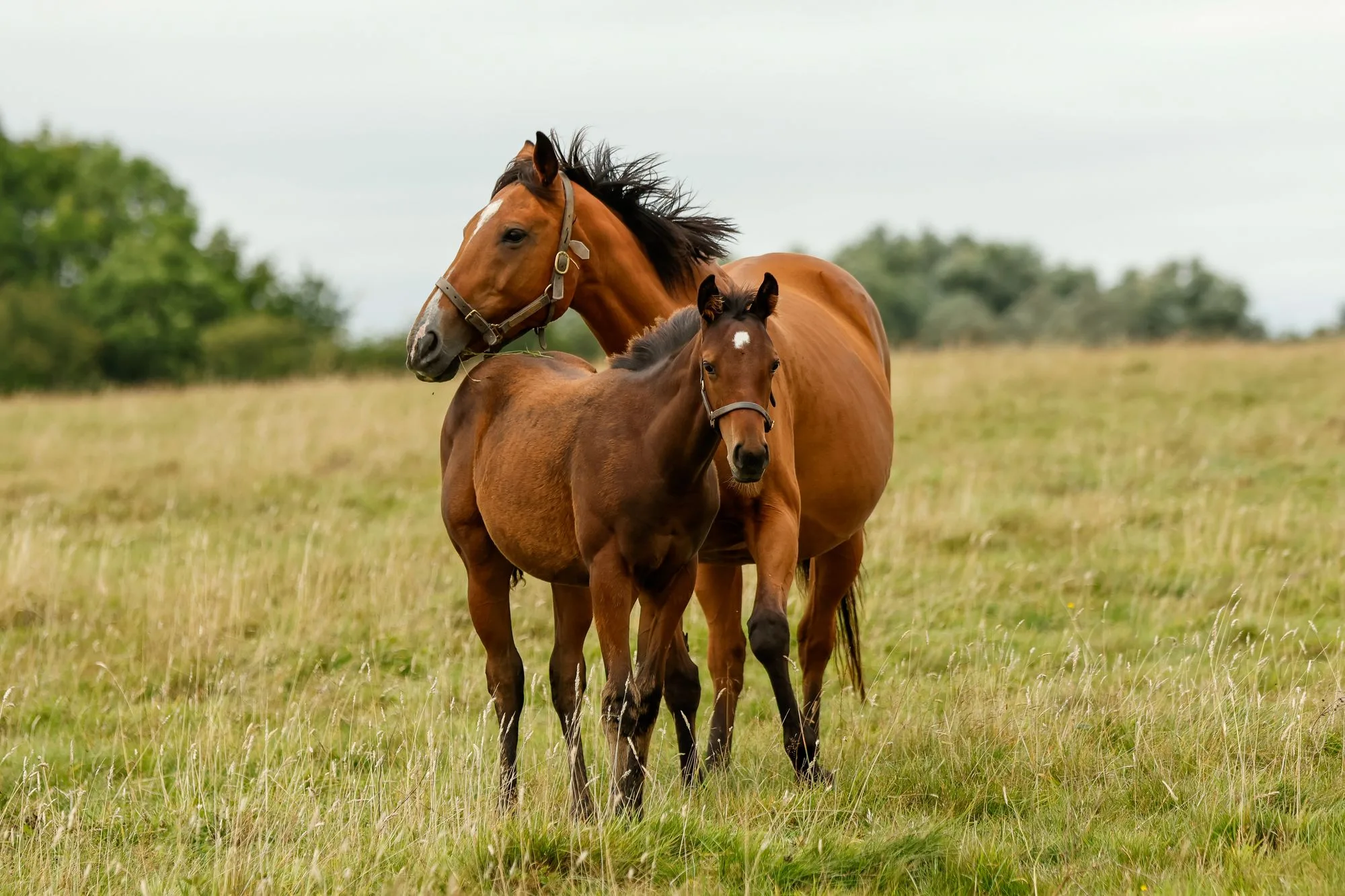
Horses are foragers and typically walk up to 18 miles a day in the wild. They are a useful part of the ecosystem and can benefit wildlife in the right setting.
No one size fits all
Good management of a paddock or field for grazing horses can be done in many different ways; what is really successful in one place might not work elsewhere. This is because so many factors influence the outcome, including different soil types, grass and vegetation types, the surrounding environments, average rainfall, land undulation and situation (e.g. on top of a hill vs a floodplain).
Equally, every horse has different requirements based on their breed, size, gut health and overall physiology.
The goal is to find the best possible system that provides a healthy environment for your particular horse, and supports nature and wildlife in that setting.
Just some approaches to consider
Track systems
A setup dedicated to keeping horses only around the perimeter of a field, or through a specific walking route, to preserve the land in the middle. The system encourages more movement daily as they walk around the track, with enrichment, food, shade and water spots located in different areas, whilst leaving significant areas of land for habitat and species-rich grassland to thrive.
Equicentral system
The principle of this is to create a range of areas that provide different enrichment and encourage movement, rather than enclosing horses in a specific field. This creates a more natural environment for the horse to roam, whilst ensuring that no particular field is overgrazed. It also allows field rotation, giving grassland rest periods to recover, and space for fenced-off areas dedicated to habitat.
Diverse sward
Horses benefit from diversity in their gut, just as we and other animals do. Having a field that is diverse in horse-safe grasses and plants encourages browsing and self-selection, improves the paddock’s resilience to extremes in weather, parasites, etc., and gives nature and biodiversity, which we all rely on for survival, a huge boost. Consider planting a diverse seed mix in your paddocks to create more resilience and support better health for the ecosystem living beneath the soil.
Hedgerow and tree planting
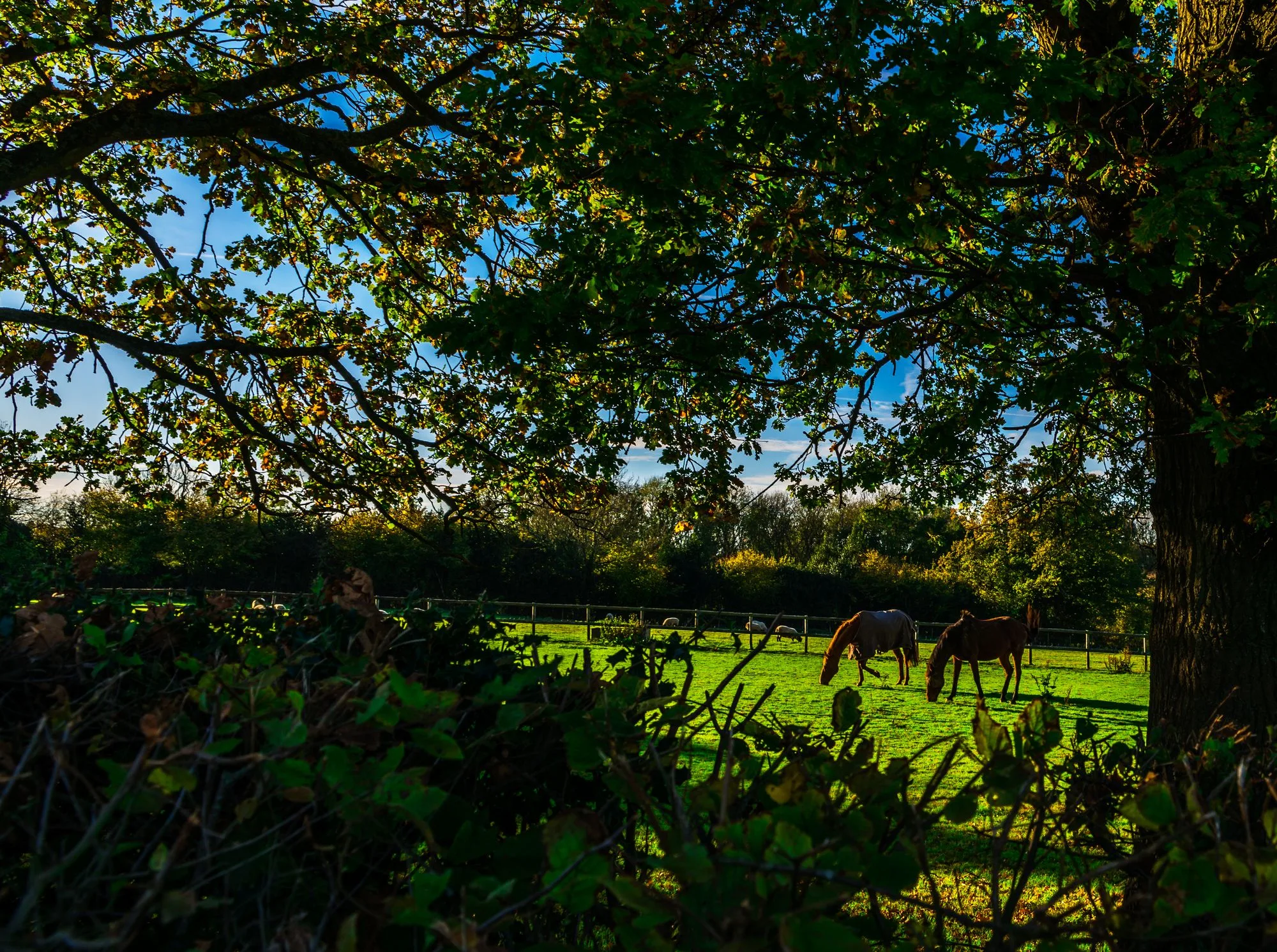
Simply adding hedges and trees to your existing fenceline will increase the habitat in your paddocks substantially, as well as providing shade, shelter and browsing interest for your horse. Hedges are great for supporting soil health, creating natural resilience in the field to flooding and can even sequester carbon (remove carbon from the atmosphere), meaning that planting trees and hedges benefits the horse, nature, the soil and helps in the fight against climate change.
How to start
To manage your paddocks and fields to get them to their own ‘best’ version, you need to learn about your land, what currently exists there and what it would become if it were left entirely unmanaged and allowed to revert to a wild state.
1. What soil do you have?
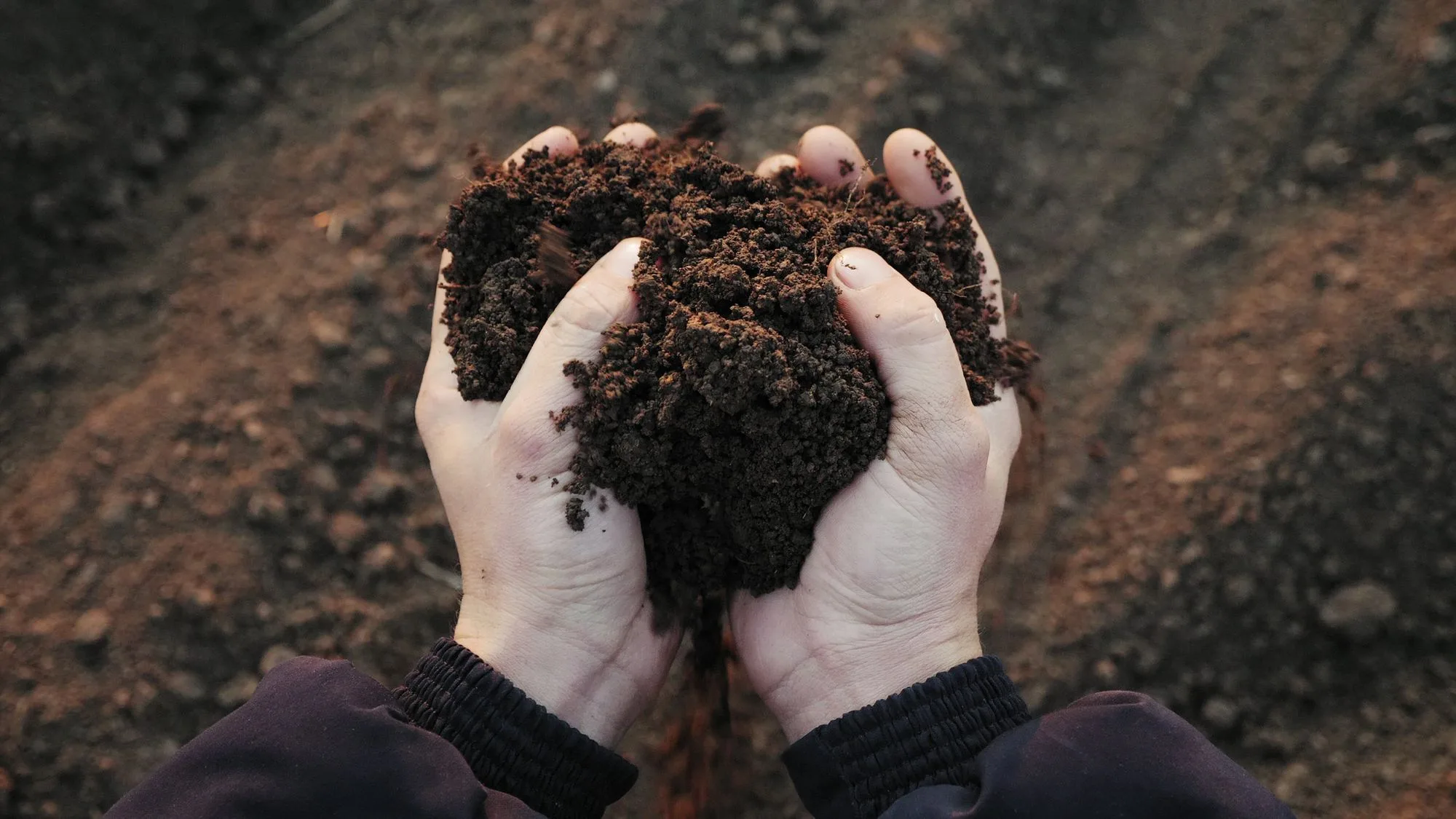
You can test your soil at home or arrange for an agronomist to visit.
How to test your soil pH at home
- 1.Take a few small spoonfuls of soil from 4 to 6 inches deep in your paddock.
- 2.Put 2 tablespoons of soil in a clean bowl and add ½ cup of white vinegar. If it fizzes or bubbles, your soil is alkaline with a pH above 7.
- 3.If the vinegar does not cause a reaction, place 2 tablespoons of fresh soil in a second bowl.
- 4.Moisten it with distilled water, then add ½ cup of baking soda. If it fizzes, your soil is acidic. If neither test causes fizzing, your soil is likely neutral (around pH 7).
How to test soil texture at home
- 1.Dig down about 6 inches and fill a clear glass jar one-third to one-half full with your soil sample. Remove any sticks or large debris.
- 2.Add water almost to the top, leaving a small air gap, and include a tiny squirt of washing-up liquid to help break the soil apart.
- 3.Put the lid on tightly and shake the jar vigorously for about 1 to 3 minutes. Set it on a flat surface. Sand settles at the bottom within 1 minute, silt settles in the middle layer after about 2 hours, and clay settles very slowly on top over 24 to 48 hours.
- 4.Measure the thickness of each layer with a ruler to estimate your soil type. Because you cannot easily change your soil’s base texture, knowing these ratios tells you how your soil naturally behaves regarding drainage, watering needs, and nutrient retention.
What your jar test tells you
Sand
Fast drainage, low nutrients. Water moves through quickly. It does not hold onto fertilisers well, meaning you will need to water and feed your grass more frequently in smaller amounts.
Silt
Good moisture retention, high compaction. Silt holds onto water and nutrients better than sand, making it fertile. However, it is highly prone to erosion, packs down tightly, and can form a hard crust on top.
Clay
Heavy, dense, nutrient-rich. Clay particles hold tightly to nutrients but trap water. High-clay soil drains very slowly, compacts easily, and can suffocate grass roots if it stays waterlogged.
From this baseline, you can begin to work out what setup is likely to succeed best for the land, working with it, not against it, whilst also making a setup that suits your own needs as the person managing it, and the horses grazing on it.
What grass do you already have?
Look at the variety of grasses currently living in your paddock. What is thriving and what is absent? This will give you an idea of what already works well in your location and seeds that you may wish to introduce for diversity.
What trees and shrubs do you already have?
Taking time to record the habitats that you already have in place is beneficial both in understanding what your horse may be ingesting, and what your baseline is for natural habitat. Trees and shrubs can benefit a horse’s diet in different ways, or be toxic, so it is important to get to know what you have on site. Certain types of trees and shrubs can support flood defences, grow quickly for shade or provide year-round shelter.
Given that a reasonable level of knowledge of the land is needed, we suggest starting out your paddock management journey in conjunction with some professional support, or solid research.
Where to start: a checklist
Our proposed ‘where to start’ checklist can be worked through yourself, but you may need professional support and guidance in some areas. Please note, it is not a comprehensive guide to paddock management, but gives you some pointers on how to begin thinking about managing your paddocks and fields differently.
Learn about your land
- What soil type do you have?
- What grasses are already there?
- What other plant species and hedging are there?
- Do any other animal species, domestic or wild, rely on this environment?
- Are you near a watercourse?
- What is the history of your land (e.g. has it always been grazed by horses, was it previously used for agriculture, etc.)?
Consider the challenges and risks you currently face
- Flooding
- Poaching of the land (i.e. big, bare worn patches)
- Winter mud
- Dry, dusty environments in summer months
- Lack of shade
- Lack of filtration
Note down what is important to you
- What is your current routine?
- Any special needs to consider for your horses (e.g. laminitics, solo grazing facilities, herd grazing only, etc.)
- What would you like to change, and why (e.g. save time, reduce additional forage costs, reduce mud in the winter, improve summer grazing and dust reduction, etc.)?
List these in priority order
- Jot down the solutions you are already aware of, or considering.
- Think about timescales, investment needs and what might be reasonable to achieve by when.
- Consider: seasonality, current ground conditions, upfront cost of any investment in infrastructure and the payback of this, and horse vs land needs (e.g. keeping horses off a particular area), in the short, medium and long term.
This is the point at which some professional support might be most helpful. Often initial consultations can be done for free, and give you direction on what might work best for you based on the above.
What should I do next?
At this point, you may have established a plan for what will best suit your horse and the environment you already have, or be ready to find out more about your land through tools such as soil testing, land surveying etc.
Map out the type of paddock or horse management system that you would like to put in place and identify the advice, tools or resources you may need to achieve that. Watch our videos for examples of paddock management practices already in place or reach out to professionals like Equine Ecologists for additional advice.
Explore more articles

Simple swaps for a healthier yard, horse and planet.
What to measure, how to log it and the tools to use.

Repair, reuse and give old kit a new job.